10 Days in Budapest: Thermal Baths, Ruin Bars, and Danube Evenings Worth Every Minute
Budapest is one of those cities that takes you by surprise even when you think you know what to expect. You arrive ready for the thermal baths and the Chain Bridge selfies, and then the city quietly rearranges your plans. A conversation over pálinka at a ruin bar keeps you out until 4am. A sudden downpour pushes you into a grand espresso hall where you end up staying three hours nursing a coffee and watching strangers live their lives. This is Budapest: layered, contradictory, and genuinely addictive.
The city sits at the intersection of the Ottoman Empire’s spa culture, the Austro-Hungarian Empire’s architectural ambition, and a post-Communist creative energy that produced one of Europe’s most inventive nightlife scenes. It’s also one of the most affordable capitals on the continent, which means you can spend ten days here without counting every forint, a rare privilege in 2024 Europe. For those who work remotely, the combination of fast Wi-Fi, stunning cafés, and low costs has made Budapest a recurring stop on the circuit of cities that actually work for focused, connected living.
Whether you have ten days to burn or you’re building a mental itinerary for the future, this guide covers the city the way it deserves to be covered: honestly, practically, and with the kind of detail that only comes from time spent on the ground.
Buda vs. Pest: Understanding the City’s Two Souls
Most visitors treat Budapest as a single entity, which is technically correct since the two sides were unified in 1873, but functionally misses something important. The Danube River that divides them isn’t just geographical, it separates two distinct rhythms.
Buda is older, hillier, quieter. This is where you find the Castle District perched above the river, cobblestone streets, wine cellars carved into limestone caves, and a pace that feels almost provincial. The residential neighborhoods on this side — Krisztinaváros, Pasarét, Budakeszi út, are where locals with families tend to settle. Buda’s hills also offer the best viewpoints in the city, including Gellért Hill and Fisherman’s Bastion, both of which look entirely different at dawn versus golden hour.
Pest is flat, dense, and alive. The city’s commercial center, most of its nightlife, nearly all the ruin bars, the major market halls, and the bulk of laptop-friendly cafés are all here. The Jewish Quarter, the 7th district (also called Erzsébetváros), is the creative heart of modern Budapest, where street art and Baroque synagogues coexist on the same block, and where a crumbling apartment complex somehow became one of the world’s most famous bars.
When planning your days, a useful rhythm is to spend mornings on the Buda side, quieter, better for walking and viewpoints, and afternoons and evenings in Pest, where the energy picks up as the day progresses.
Thermal Baths: A Budapest Ritual, Not a Tourist Checkbox
Budapest sits on more than 100 natural hot springs, a geological accident that turned the city into the spa capital of Europe. The Romans called it Aquincum and built baths here in the 2nd century AD. The Ottomans expanded the tradition in the 16th century, and the Austro-Hungarians eventually added the ornate architecture that now makes soaking in these pools feel like bathing inside a museum.
There are more than a dozen public bath complexes operating today. These four are worth your time:
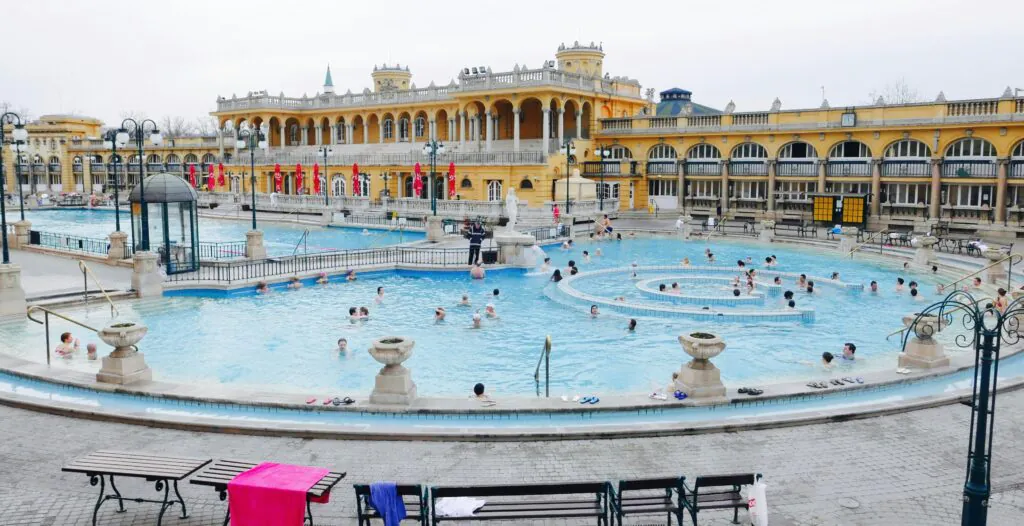
Széchenyi Thermal Bath is the most iconic. The Neo-Baroque building in City Park has outdoor pools large enough to swim laps, and the image of older men playing chess while submerged in steaming water up to their armpits is one of Budapest’s defining visual clichés — one that turns out to be completely real. Go on a weekday morning before 10am to avoid the tourist crowds. The Saturday night SPArty events turn the pools into something else entirely.
Rudas Bath is the most atmospheric. The original 16th-century Ottoman dome creates a specific quality of light, dark, damp, amber — that no amount of photography can accurately capture. There’s a rooftop pool with views of the Danube and Gellért Bridge that becomes particularly surreal at night. Women-only and mixed days rotate throughout the week, so check the schedule at rudasfurdo.hu before showing up.
Gellért Thermal Bath is housed inside the Art Nouveau Hotel Gellért and is the most architecturally elaborate of the lot. Ornate mosaics, carved stone balustrades, stained glass. It’s pricier than the others, and the attached hotel guests get priority access, but the main hall is worth experiencing at least once.
Lukács Bath is the locals’ choice, less touristic, genuinely functional, located in the 2nd district on the Buda side. It’s where Budapestians actually come to decompress, which means less English spoken and more of the authentic, unperformed version of bath culture.
Budget roughly 5,000–8,000 HUF (€12–20) for a standard thermal bath entry. Renting a locker, towel, and bathing suit on-site adds another 2,000–3,000 HUF.
Viewpoints and the Art of a Budapest Sunset
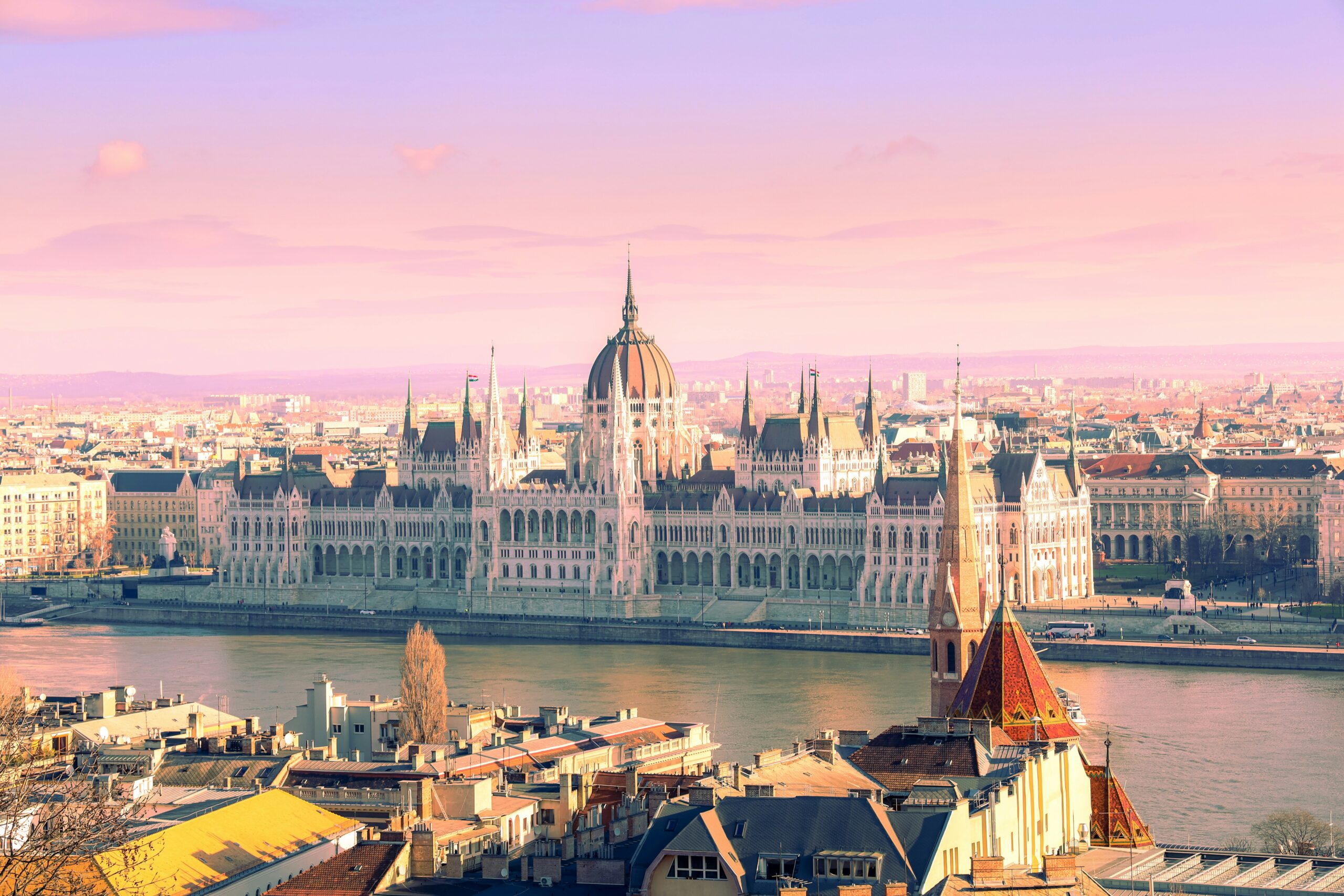
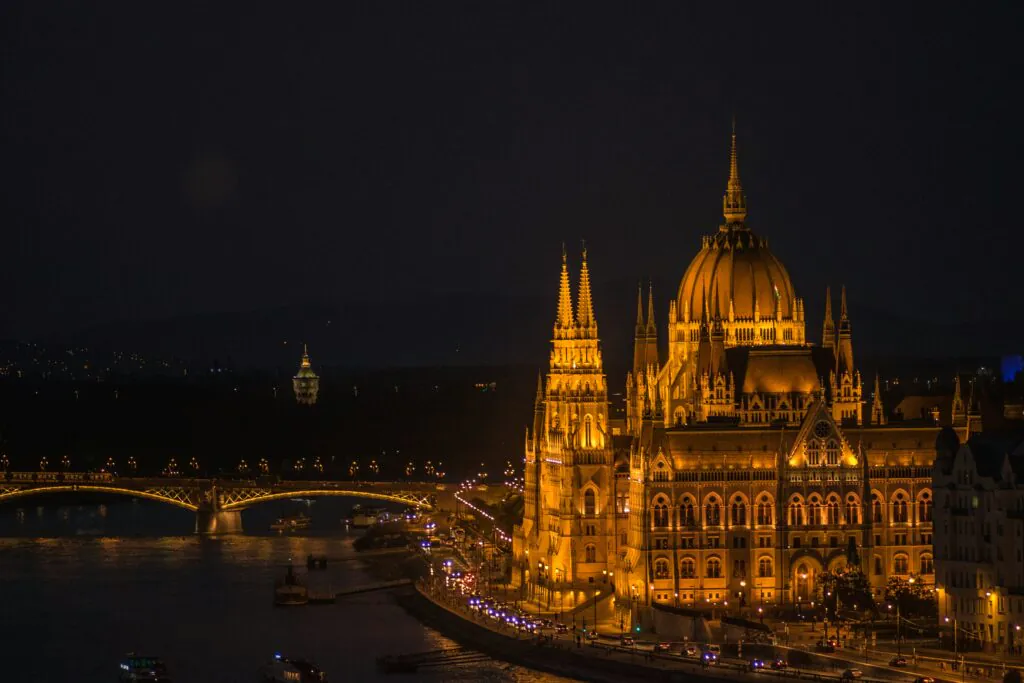
The city was designed, whether intentionally or not, to reward people who pay attention to light. At certain angles, at certain hours, the Danube turns copper and the Parliament building across the water looks like it was rendered by someone who had only ever read descriptions of Gothic cathedrals but dreamed them into something grander.
Gellért Hill (Gellért-hegy) is the best elevated viewpoint. The hike from the Buda embankment takes about 25 minutes and rewards you with a panorama that takes in both sides of the river, the Parliament building directly across, and Margaret Island below. Arrive 45 minutes before sunset and stay for the full darkness, the city’s lighting at dusk is equally worth the wait.
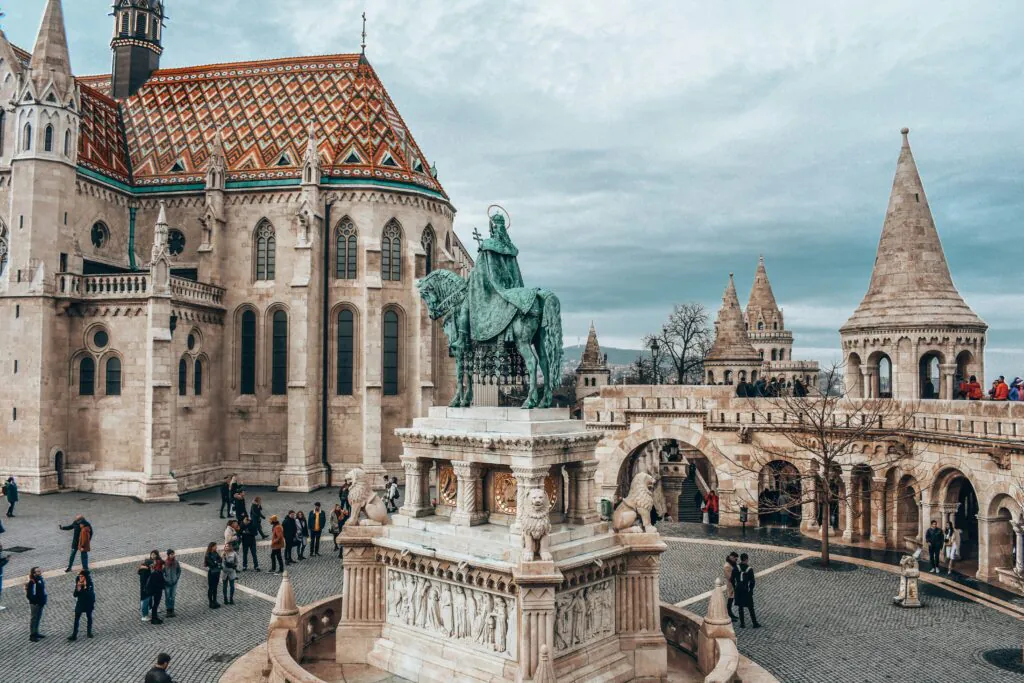
Fisherman’s Bastion (Halászbástya) in the Castle District is the more famous option. Admission to the upper terraces costs around 1,500 HUF, but the lower level is free and nearly as good. The seven towers represent the seven Magyar tribes who founded Hungary. The view is directly onto the Parliament building, which was clearly positioned with this exact vantage point in mind.
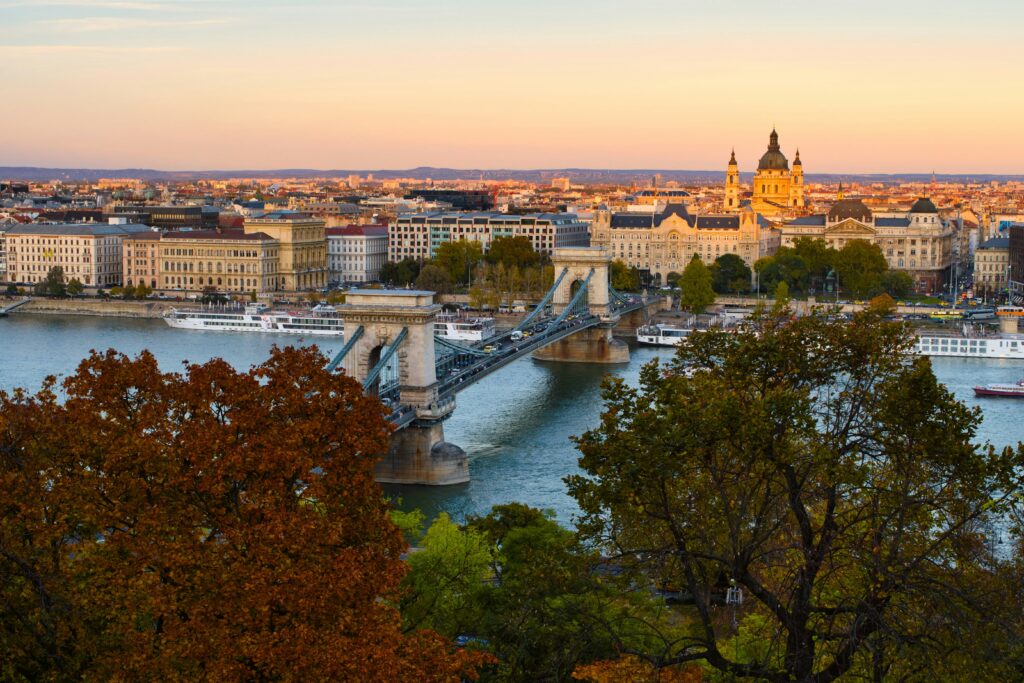
Margaret Bridge (Margit híd) at mid-river offers a less-visited perspective. Stand at the bridge’s midpoint as the sun goes down and you get an unobstructed view of both the Chain Bridge and the Buda hills simultaneously, less dramatic than Gellért Hill but more intimate.
For those who want a more formal experience, the river cruises that depart from the Vigadó Pier offer dinner and evening illumination tours. Legenda Cruises runs reliable operations, and the 1.5-hour evening cruise is genuinely worth doing at least once.
Ruin Bars and Budapest’s Alternative Nightlife
The ruin bar movement began in the early 2000s as a response to the city’s abundance of derelict Austro-Hungarian buildings, structures that were too expensive to restore but too structurally interesting to demolish. Someone decided to put mismatched furniture inside one, hang some lights, add a bar, and charge affordable entry. What emerged became a cultural export.
Szimpla Kert is the original and most famous. It occupies an entire building block in the 7th district, with multiple courtyards, rooms, and levels, each decorated in a style that can only be described as organized chaos, vintage television sets welded to walls, bathtubs repurposed as seating booths, murals on every surface. It’s a tourist magnet now, which means Friday and Saturday nights feel like an airport. Come on Sunday for the farmers’ market (10am–2pm), which is an entirely different, quieter version of the same space.
Instant-Fogas is the larger alternative, essentially two adjacent venues connected by a tunnel. It runs later and louder than Szimpla, with multiple rooms dedicated to different music styles. Good for when you want to actually dance rather than just sit and stare at the decor.
Mazel Tov sits in the Jewish Quarter and occupies a bombed-out courtyard that has been covered with a glass roof. It functions as a restaurant during dinner hours and transitions into a bar as the night progresses. The food is Israeli-influenced and genuinely excellent.
Corvin Club is the local option, deeper in Pest, less polished, frequented by Budapestians rather than tourists. The programming leans toward electronic music and local DJs.
Budapest’s nightlife genuinely starts late. Before midnight, most places are half-empty. The real movement happens between 1am and 4am. If you’re not prepared for that rhythm, the city will feel underwhelming after dark.
Laptop-Friendly Cafés: Budapest for Focused Days
The city has an embarrassment of options for working in beautiful spaces. The grand espresso hall culture that the Austro-Hungarians established never really went away, it just morphed to accommodate power outlets and Wi-Fi passwords.
Centrál Kávéház is the gold standard. A restored 19th-century coffeehouse on Károlyi utca, with high ceilings, ornate woodwork, and a staff that will leave you alone for hours as long as you order periodically. The coffee is excellent, the Wi-Fi is reliable, and the atmosphere is conducive to both creative work and serious thinking.
Hadik Kávéház in the 11th district on the Buda side is smaller, more neighborhood-focused, and draws a literary crowd. Writers and architects have been regulars here since the early 1900s. Less touristic than Centrál, and the quiet on weekday mornings is exceptional.
Espresso Embassy near Andrássy Avenue is Budapest’s specialist coffee destination, serious about espresso, run by people who genuinely understand extraction ratios and single-origin sourcing. Multiple power outlets, fast Wi-Fi, and a crowd of people who are all very focused on their screens. Not beautiful in a historical way, but functional and calm.
Massolit Books & Café in the 7th district is a bookshop-café combination beloved by the expat and long-stay community. Used English-language books line the walls, the coffee is good, and the homemade cakes are genuinely outstanding. It gets busy on weekend afternoons but is calm during weekday mornings.
For co-working spaces with more structure, Impact Hub Budapest and Kitchen Budapest offer day passes and weekly memberships.
Practical Information: What You Actually Need to Know
Currency: Hungary uses the Hungarian Forint (HUF), not the Euro. As of 2024, roughly 390–400 HUF = €1. ATMs are widely available; Revolut and Wise work well here. Credit cards are accepted in most places, but small markets and some bath facilities prefer cash.
Daily Budget: A comfortable day, thermal bath entry, two meals, a few coffees, and transport (runs €30–50). A budget traveler can manage €20–25. Fine dining and cocktail bars push it to €60–80.
Getting Around: The public transport system is excellent and cheap. A 24-hour unlimited pass costs around 1,650 HUF (€4). The metro has four lines; trams along the embankments are both useful and scenic. Download the BKK app (bkk.hu) for real-time schedules.
Best Time to Visit: May to June and September to October offer the best combination of temperature and crowd levels. July and August are hot and tourist-dense. Winter (November to February) is cold but atmospheric, with Christmas markets in December and far fewer visitors competing for space at the baths.
Language: Hungarian (Magyar) is notoriously difficult, but virtually everyone in the service industry speaks English. Learning “köszönöm” (thank you) and “kérem” (please) earns visible goodwill.
Safety: Budapest is generally safe. Petty theft exists in tourist areas and on crowded trams, keep bags zipped and be aware on the 47/49 tram lines near Deák Square. The city is well-lit and active late into the night.
Where to Stay: The 5th district (around the Parliament) and 7th district (Jewish Quarter) put you close to the center of Pest activity. For quieter stays with better value, look at the 9th district (Ferencváros), which has gentrified significantly in recent years. Booking via Booking.com or searching through local property sites will find you a decent apartment for €40–80 per night.
Apps worth having: Google Maps (works well offline), BKK for public transport, Google Translate (the camera feature handles Hungarian menus), and Happycow for vegetarian and vegan options.
Plan your trip to Budapest: https://trips.traveneur.com.br
Eat Beyond the Goulash
Hungarian food is heavier than you might expect and more interesting than its reputation suggests. Goulash (gulyás) is genuinely good but bears little resemblance to what is served outside Hungary, it’s a soup, not a stew, and the version you get from a street market or a genuine étterem is worth seeking out.
Beyond that: lángos (deep-fried flatbread with sour cream and cheese, consumed at street stalls) is essential and ridiculous. Chimney cake (kürtőskalács) is sold everywhere and best warm. Hortobágyi palacsinta is a savory pancake filled with veal, and it’s better than it sounds. The Central Market Hall on Vámház körút (Fővám tér) is the best single destination for sampling multiple things at once while watching how Budapestians actually shop for food.
For restaurants: Borkonyhá (Wine Kitchen) near the Parliament has a Michelin star and a wine list that justifies the prices. Kőleves in the 7th district is reliable, affordable, and crowded with locals. Babel near the Chain Bridge pushes Hungarian ingredients in a more contemporary direction.
When to Leave and Why It’s Always Too Soon
Ten days is enough to understand Budapest. It is not enough to stop discovering it. The city rewards the kind of attention that most short trips don’t allow, noticing how the morning light hits the Keleti railway station, finding the thermal bath that’s right for your particular mood that day, learning which ruin bar shifts into a different register after 2am.
Go once and you’ll likely plan a return before you’ve even unpacked at home.
Related Post: Cheap Destinations in Europe: Where Your Money Lasts Longer and the Experience Feels Richer