Phuket Hidden Beaches: The Quiet Itinerary for Travelers Who Want the Island Without the Crowds
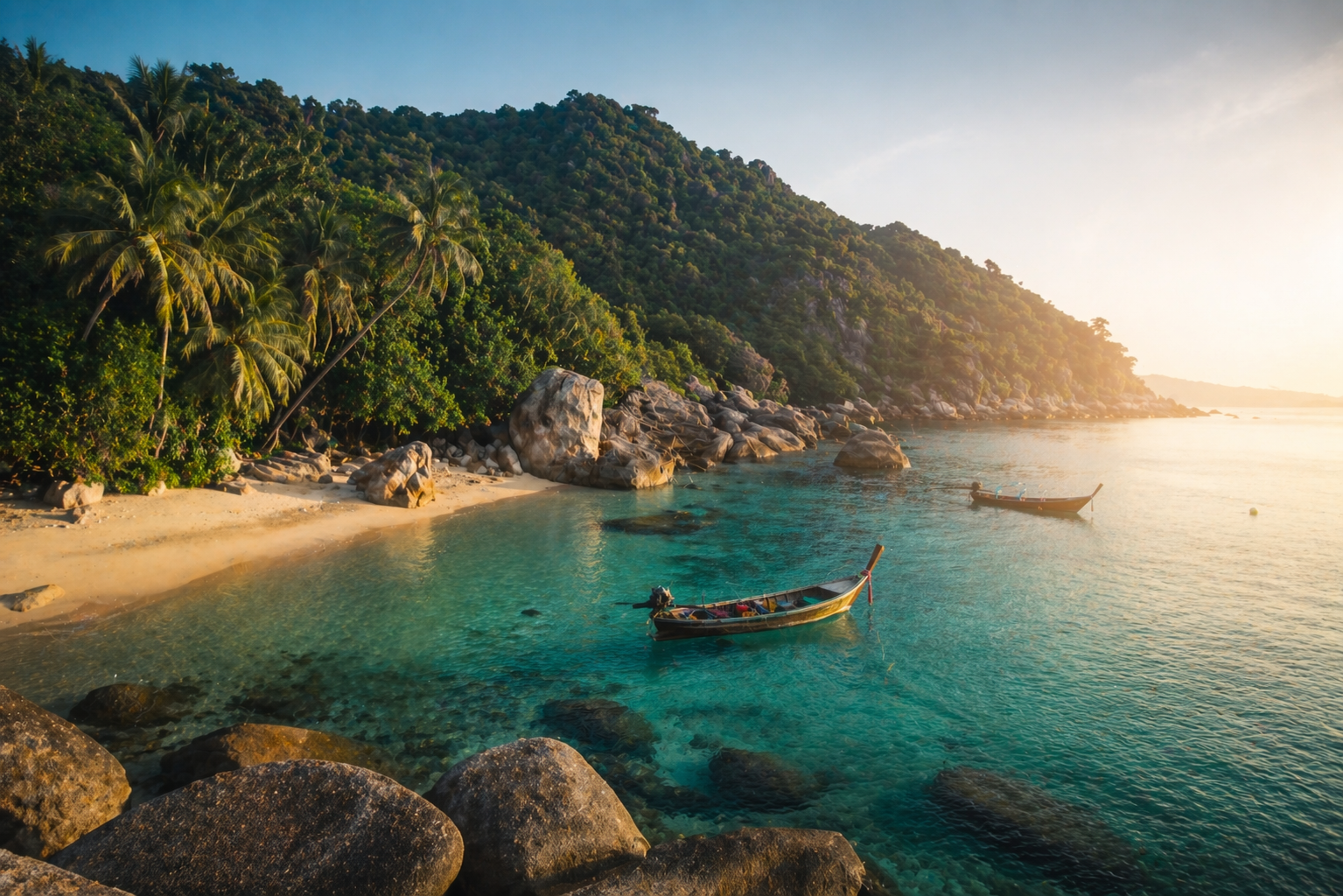
Phuket hidden beaches are real, and most of them sit within twenty minutes of the island’s most overrun stretches of sand. The problem isn’t geography. It’s that most visitors arrive with an itinerary built around the loudest version of Phuket: Patong, Bangla Road, sunset cocktails at the same beach club that fills everyone’s feed. That version of the island is real, and it has its place. But it shares a coastline with something else entirely: a Phuket of granite coves, early-morning monks, fishing piers at dawn, temple grounds where the only sound is an occasional bell and the low drone of cicadas in the heat.
This quiet Phuket itinerary is for travelers who want the second version. It’s built around the south and the north of the island, where pace drops and the experience starts to resemble what this place looked like before it became one of Asia’s most-visited destinations. Over ten million tourists came to Phuket in 2024. Those ten million people are concentrated in a remarkably small area. Step outside it, and the island opens up in ways that still genuinely catch you off guard.
Why Phuket’s Quieter Side Is Worth the Effort
Phuket tourism is geographically compressed in a way that works in the independent traveler’s favor. Patong and its surrounding strip absorbs the great majority of visitors, which means that even at peak season, beaches like Ao Sane, Laem Singh, Nai Thon and Banana Beach run at a fraction of their theoretical capacity. Temples in the north (Wat Srisoonthorn with its 29-meter reclining Buddha, Wat Phra Thong with its half-buried gold image) rarely appear on day-tour itineraries despite being among the most architecturally striking sites on the island.
This isn’t an argument against Patong. It’s an argument for spending less time where the crowds default and more time where the island breathes on its own terms. First-time visitors with a preference for exploration over spectacle will find this itinerary rewarding. Return visitors who feel they’ve already done Phuket will find it gives them a different island entirely.
Five days is the right duration. Fewer than that and you’ll spend too much time in transit between the island’s distinct zones. More than seven and you’ll hit a rhythm that starts to feel repetitive. Five days covers the south, Old Town, the north and two or three properly intentional beach days.
Related Post: The Ultimate Guide to Budget-Friendly Travel in Southeast Asia
When to Go
Phuket runs on two seasons, and both have a legitimate case to make.
Dry season runs November through April: clear skies, calm water, beaches at their most photogenic. December to February brings peak crowds and hotel prices that reflect it. November and March offer dry-season quality at rates roughly 20 to 30 percent below the holiday peak, with noticeably fewer people on the roads and at the temples.
Wet season covers May to October, with August and September seeing the heaviest rain. What most first-timers don’t anticipate is how localized and short-lived the rain tends to be. Afternoon downpours arrive, clear in thirty minutes, and leave the light looking like it was arranged for a film set. Mornings are often entirely dry. Temperatures hold around 28 degrees. Accommodation costs drop by as much as half. For an itinerary built around dawn temples, quiet beaches and slow mornings, that trade-off is more than acceptable.
April deserves a separate mention. Songkran, the Thai New Year, falls mid-month and transforms the island into an extended water fight that lasts days. It is chaotic, joyful and genuinely unlike anything else. If you’re open to energy rather than quiet, it’s one of the best times to be in Thailand.
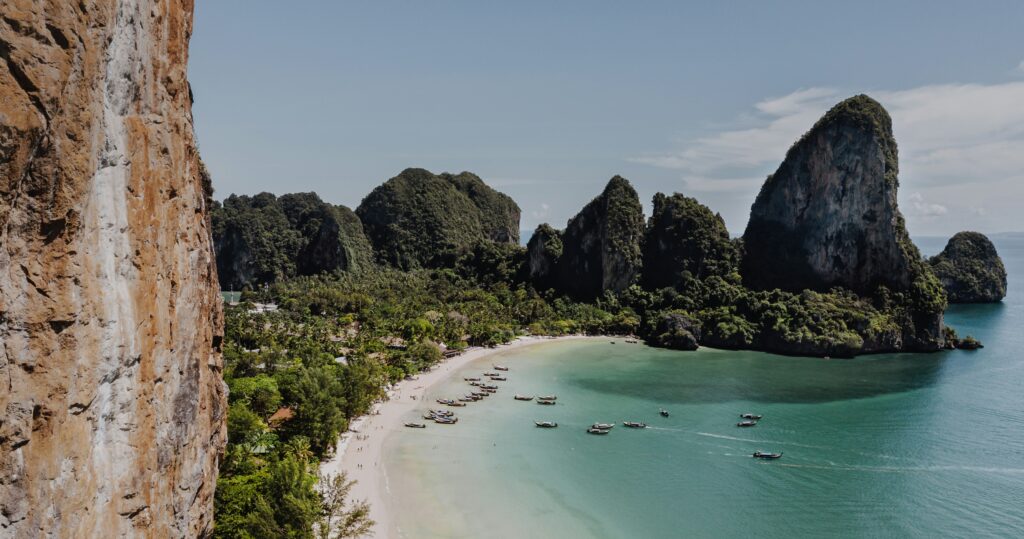
Day 1: Head South and Skip the Obvious Arrival
Land at Phuket International Airport and go south. Not toward Patong, but past the tourist cluster entirely, to Rawai and Nai Harn at the island’s southernmost tip. This is where long-term expats and Thai families tend to settle. Quieter streets, better local food, and beaches that don’t require fighting for a patch of sand.
Spend the first afternoon at Nai Harn Beach. It’s not hidden, but it’s considerably calmer than anything further north: backed by a freshwater lake, surrounded by hills, with the kind of enclosure that makes it feel like a place rather than a strip. Swim, decompress, get a sense of the island’s scale.
For the evening, head to the Rawai Seafood Market. The setup is unlike anything in a tourist restaurant. Buy fresh fish, prawns, crab or lobster directly from vendors at the pier, then cross the road to one of the small restaurants and pay a preparation fee to have it cooked. Point at what you want, agree on a price, find a table. Salaloy Seafood, listed in the Michelin Guide, and Nikita’s Beach Restaurant handle the cooking end reliably. Prices are low. Quality is not.
Finish at Promthep Cape. The viewpoint at the island’s southern tip is worth the small crowd it draws, particularly when the light drops through sea mist over the outer islands. Three kilometers from Rawai, no admission fee.
The Best Phuket Hidden Beaches (and How to Reach Each One)
Start before nine. This is the day the itinerary earns its premise, and timing matters at every beach below. Base yourself in the south and work your way along the coast; most of these beaches are within thirty minutes of Rawai by scooter.
Ao Sane Beach
Ao Sane sits just east of Nai Harn, tucked behind a headland and backed by tropical almond trees and granite boulders. The snorkeling is the best on the southern coast: live coral close to shore, visibility that holds through shoulder season, and a beach running about 200 meters that rarely fills outside midday. Getting there requires following an unmarked track past a small resort entrance. No signs, no crowds before 10am.
Freedom Beach
Freedom Beach requires a boat. Long-tail transfers run from Patong in about ten minutes, or there’s a steep jungle trail from the road above. White sand, clear water, and a particular quiet that comes from being inaccessible by road. Arrive before 10am and you may have it mostly to yourself. A small beach bar operates in dry season. Bring cash.
Laem Singh Beach
Laem Singh, between Kamala and Surin, went through years of closure due to land disputes. Since 2025, the trail from Surin Beach has been properly reopened and signed. It’s a short walk through vegetation to a bay with a genuinely wild quality: one rustic bar-restaurant perched above the water, unobstructed views, and no development beyond that. Eat lunch there.
Tri Trang Beach
Tri Trang, fifteen minutes south of Patong, is the practical option for travelers who want calm without the logistics. Paved access road, limited public parking near the old resort entrance, a 500-meter crescent that feels separate from the tourist center despite its proximity. Good swimming water in dry season and a fraction of the traffic you’d expect given the location.
Nai Thon Beach
Further north in Sirinat National Park territory, Nai Thon runs about 700 meters with almost no tourist infrastructure. Thai families, a few long-stay expats, and beach restaurants serving pla pao (salt-grilled whole fish over charcoal) at prices that bear no resemblance to anything in Patong. The park boundary keeps development back; the northern end in particular is quiet enough to feel genuinely remote.
Close the day at Kata Viewpoint, on the ridge road above the beach. The view over Kata, Kata Noi and the islands beyond is one of the island’s finest and sees a fraction of the traffic of Promthep. Then dinner in Kata or Karon: slower pace, better food-to-price ratio than anything in the tourist center.
Day 3: Phuket Temples in the Morning, Then Old Town
The best time to visit Phuket temples is between 6:30am and 9am on a weekday. Before that window closes, the spaces belong to the monks and the residents who come to pray. After it, tour buses fill the parking areas and the atmosphere shifts from devotional to documentary. Set an alarm you’ll actually respect. The difference between arriving at Wat Chalong at 7am and arriving at 10am is the difference between two entirely different experiences of the same place.
Wat Chalong, formally Wat Chaiyathararam, is the largest and most revered Buddhist temple on the island, built around 1837 and granted royal recognition nine years later. Its 60-meter golden chedi is said to hold a fragment of the Buddha’s bone; the interior murals trace scenes from his life across three levels. At 7am on a weekday, the space belongs to the monks and the locals who come to pray. The incense is sharp. The light is soft. The sound of the city is mostly absent. By 10am, the parking area fills with tour groups and the register shifts entirely. Come early.
Entry is free. Dress modestly: shoulders and knees covered, shoes removed before entering any building. A sarong or light shawl in a bag handles the dress code at every temple on the island.
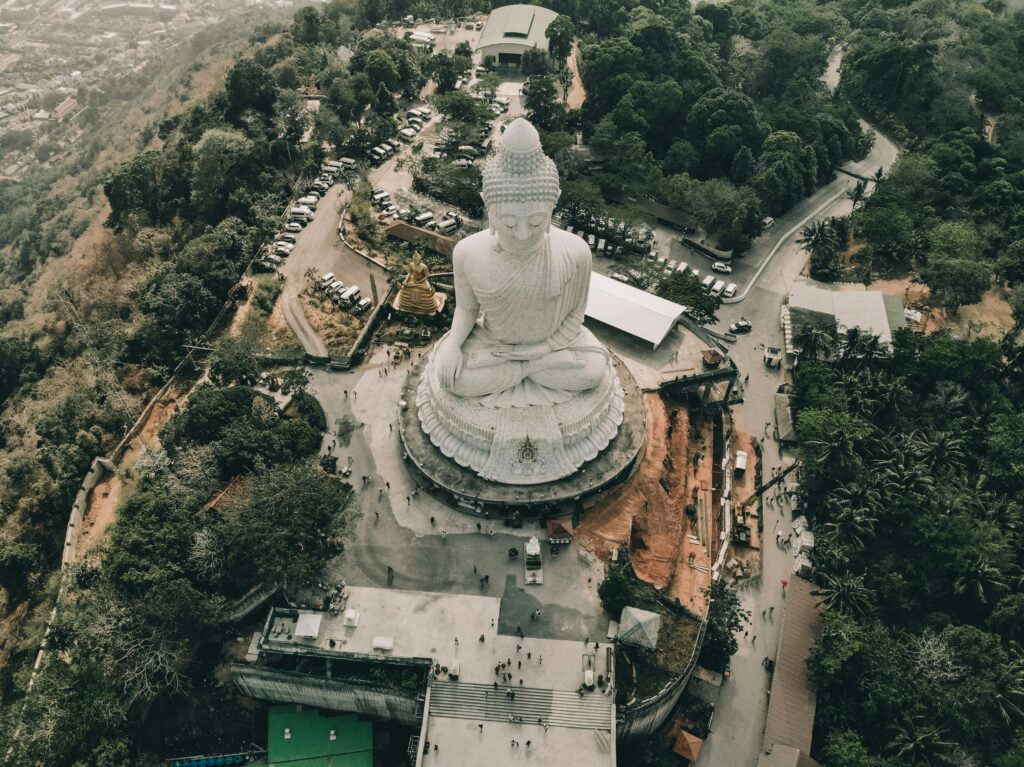
From Wat Chalong, ten minutes north by scooter or Grab brings you to Nakkerd Hill and the Big Buddha. The 45-meter white Burmese marble figure is visible from most of the southern island, and the view from its base covers the full width of Phuket coast to coast. Visit directly after the temple and the two experiences connect in a way that makes sense. After 9am, it fills up; time it right and the platform is calm enough to stand quietly for a few minutes.
The afternoon belongs to Phuket Old Town. The town center is 20 minutes north of Chalong and holds a piece of the island’s history that its beach reputation tends to bury. Phuket’s tin mining wealth in the 19th century produced a cosmopolitan merchant class whose shophouse architecture still lines Thalang Road, Dibuk Road and Soi Romanee: faded yellows and pinks, Chinese shrines tucked into alleyways, Sino-Portuguese facades in various states of restoration. It looks nothing like the resort south, and that’s the point.
Eat at Raya Restaurant: a long-running local institution serving Moo Hong (pork belly braised slow in soy and spice) and other Phuket heritage dishes in a historic shophouse. Walk Soi Romanee in late afternoon. Stop at the small Taoist shrines between the buildings; they’re active places of worship, not decorations. Respectful visitors are welcome.
One timing note: if Day 3 falls on a Sunday, reorganize the afternoon around the Sunday Walking Street Market on Thalang Road. It operates from 4pm and is the best food market on the island for anyone eating like a local, not a tourist.
Day 4: North Phuket and the Temples Nobody Talks About
Most organized tourism stops at Patong in the south and Surin in the mid-west. North of that, the island turns quieter, less developed and considerably more interesting for anyone with a scooter and a half-day to spend.
Wat Srisoonthorn in the Thalang district was built in 1792 and sits behind the tourist map’s north edge. Its 29-meter reclining Buddha lies across the roof of the main hall with a composure that the scale of it somehow doesn’t undermine. The grounds hold smaller shrines, meditation spaces, ponds and tropical planting. Arrive before 8am and you’ll likely share the space only with monks. That quiet has its own weight.
Nearby, Wat Phra Thong holds a gold Buddha image that is, according to the temple’s account, partially buried in the earth with only the head and shoulders showing. A boy who tied his buffalo to the statue and died promptly afterward prompted its discovery; the monks have never excavated further, and the story, true or not, gives the image an atmosphere that more conventionally displayed Buddhas rarely carry.
From the temples, drive to Layan Beach at the far northern end of the Bang Tao coastline. Where Bang Tao’s southern section runs into the Laguna resort development, its northern end is open, undeveloped and largely local. Wide sand, clean water in dry season, a handful of small restaurants. The beach Phuket became famous for, without the infrastructure that followed.
Further north, Nai Yang Beach edges Sirinat National Park, and its northern stretch is protected from development. Thai families, a few long-stay expats, pla pao (salt-grilled whole fish over charcoal) from the beach restaurants at prices that belong to a different island than Patong. Nai Thon Beach, smaller at around 700 meters, sits just south of the park boundary with similar energy and no tourist infrastructure to speak of.
For anyone interested in ethical wildlife experiences, the Phuket Elephant Nature Reserve in Thalang operates without riding or performance. Walking alongside rescued elephants in forest cover is a different register of experience from the staged encounters at other operations. Book ahead; spaces are limited and fill quickly.
End the day at Chillva Market near Phuket Town: a local night market with good street food, a Thai pop stage, and the kind of mixed crowd (local students, families, a few travelers who found their way there without a recommendation) that makes it feel lived-in rather than produced.
Day 5: Phang Nga Bay Before the Tours Arrive, Then a Slow Finish
Most visitors see Phang Nga Bay from a packed speedboat: forty minutes to James Bond Island, a short photography stop, return by noon. That experience is not wrong. It’s compressed.
Arrange a private or small-group boat from one of the northern piers, around Ao Por or Tha Nun, rather than from the Patong or Karon departure points. Leaving from the north puts you on the water before the main tour flotilla assembles, which changes the bay entirely.
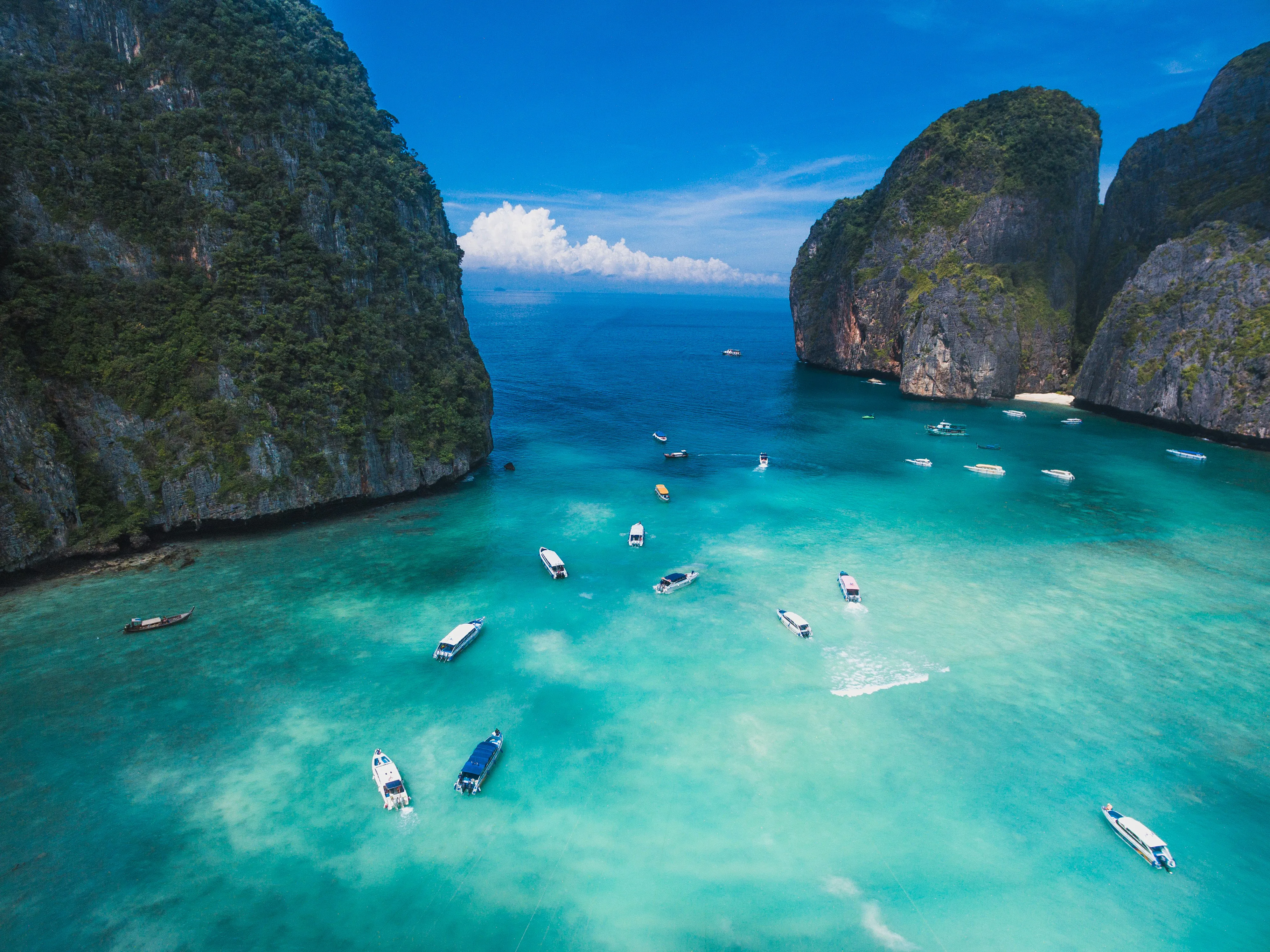
Phang Nga covers 400 square kilometers of limestone karst formations, mangrove channels, sea caves and hidden lagoon-beaches called hongs, accessible only by sea kayak at low tide through tunnels in the rock. The scale of it, 42 islands rising vertically from green water with nesting swifts wheeling overhead, is genuinely unlike anywhere else. James Bond Island is worth the stop. The hongs are the part that stays with you.
Return to Phuket by early afternoon. Spend the remaining hours according to what the trip has earned: a traditional Thai massage (300 to 500 THB for a good one-hour session at a local shop, not a resort spa), fresh coconut from a roadside cart, an hour at Nai Harn watching the light soften over the water.
Phuket rewards the traveler who stops expecting it to perform. Ask for quiet and it delivers: not as a compromise, but as the more honest version of itself.
Planning a longer Thailand trip? The quiet Phuket itinerary pairs well with five days in Chiang Mai for a complete north-south contrast — temple culture, mountain trails and northern Thai cuisine at one end; granite coves, dawn ceremonies and island seafood at the other.
Practical Notes for the Quiet Phuket Itinerary
Getting there. Phuket International Airport (HKT) receives direct flights from across Asia, Europe and the Middle East. Bangkok connections on Thai Airways, Bangkok Airways or AirAsia take around 75 minutes. From the airport, the drive south to Rawai or Nai Harn takes 45 to 60 minutes depending on traffic. Grab from the airport is significantly cheaper than the metered taxis at the main stand.
Getting around. Scooter rental runs 300 to 400 THB per day and gives you access to every beach and temple described here on your own schedule. Roads outside the main tourist corridors are manageable; traffic moves on the left. For travelers not comfortable on scooters, Grab operates reliably across the island and shows the fare before you confirm. Tuk-tuks in tourist areas don’t use meters; agree on a price before you get in or use Grab instead.
Money. Thailand uses the Thai Baht. Around 35 THB to the dollar as of 2026. Street food and scooter transport keep daily costs low: a budget traveler can move through the day on 1,100 to 1,200 THB ($30 to $35) excluding accommodation. Mid-range travelers with a pool hotel, restaurant meals and a day tour or two should budget 1,700 to 3,000 THB ($50 to $85). A guesthouse in Rawai starts around 500 THB per night; a solid mid-range hotel with a pool, from 2,000 THB; beachfront properties climb from there.
Where to stay. For Days 1 and 2, base in Rawai or Nai Harn: closer to the southern beaches, quieter streets, better local food access. For Days 3 and 4, a guesthouse in Phuket Town makes sense: central position, cheap rates, good eating on foot. Bang Tao or Kamala works well for travelers who want a single base for the whole trip; it’s central enough to reach both south and north without excessive driving.
Language. Thai is spoken across the island. English works in guesthouses, tourist restaurants and at most beaches, and fades fast in local markets, rural temples and the northern villages. A few Thai words go a long way: sawasdee (hello), khob khun kha or khrap (thank you, female/male speaker). Google Translate’s camera function handles menus and signs adequately.
Safety. Road accidents are the primary risk for tourists on the island. Wear a helmet, drive at a pace that matches your familiarity with the road, and avoid riding after dark on roads you don’t know. Red flags at beaches are not decorative; current warnings are real. Petty theft is occasional around Patong nightlife; leave anything you’d miss in the room.
Visa. Most nationalities enter Thailand visa-free for 30 days, extendable by 30 days at any immigration office. Policies have shifted periodically, so check the Royal Thai Embassy before you travel.
Apps worth having. Grab for transport and food delivery; Klook for tours at 15 to 25 percent below walk-up rates; Google Maps for navigation (reliable on the island); XE Currency for live exchange rates; Google Translate camera for menus and signs; Airalo for a Thailand eSIM you can activate before you land.
Your Phuket, Calibrated to How You Travel
What five days in Phuket looks like for a budget backpacker and what it looks like for someone who wants a pool villa and private transfers share almost no overlap, even on the same itinerary. Same beaches. Same temples. Completely different trip.
The Traveneur Trip Planner is a free tool that builds a complete day-by-day Phuket itinerary around your travel style: Budget Backpacker, Independent Traveler, Comfort Seeker or Adventure Traveler. Tell it where you’re going and how many days you have, pick a style, and it returns a real plan with actual neighborhoods, specific timing and practical advice shaped around how you move through a place. It takes about two minutes.
What Stays After the Island
The travelers who come back to Phuket, and a notable number do year after year, are rarely the ones who spent the first visit ticking off the obvious. They’re the ones who found something by accident: a beach at the end of an unmarked track, a monk who waved them into a ceremony at a temple they stopped at on a whim, a seafood dinner that cost almost nothing and tasted like everything was right with the world. None of that is hidden. It’s just slightly off the route that most arrivals are steered toward.
Head south first. Get up early enough to reach a temple before the light goes hard. Find a beach that takes some effort. The island is large enough to absorb ten million tourists a year and still keep something back for the ones who come looking.
Official travel information including visa requirements: Tourism Authority of Thailand. Sea and weather conditions before boat days: Thai Meteorological Department.