Seoul 5-Day Itinerary: Hanoks, Mountain Trails and Street Food Beyond the Hype
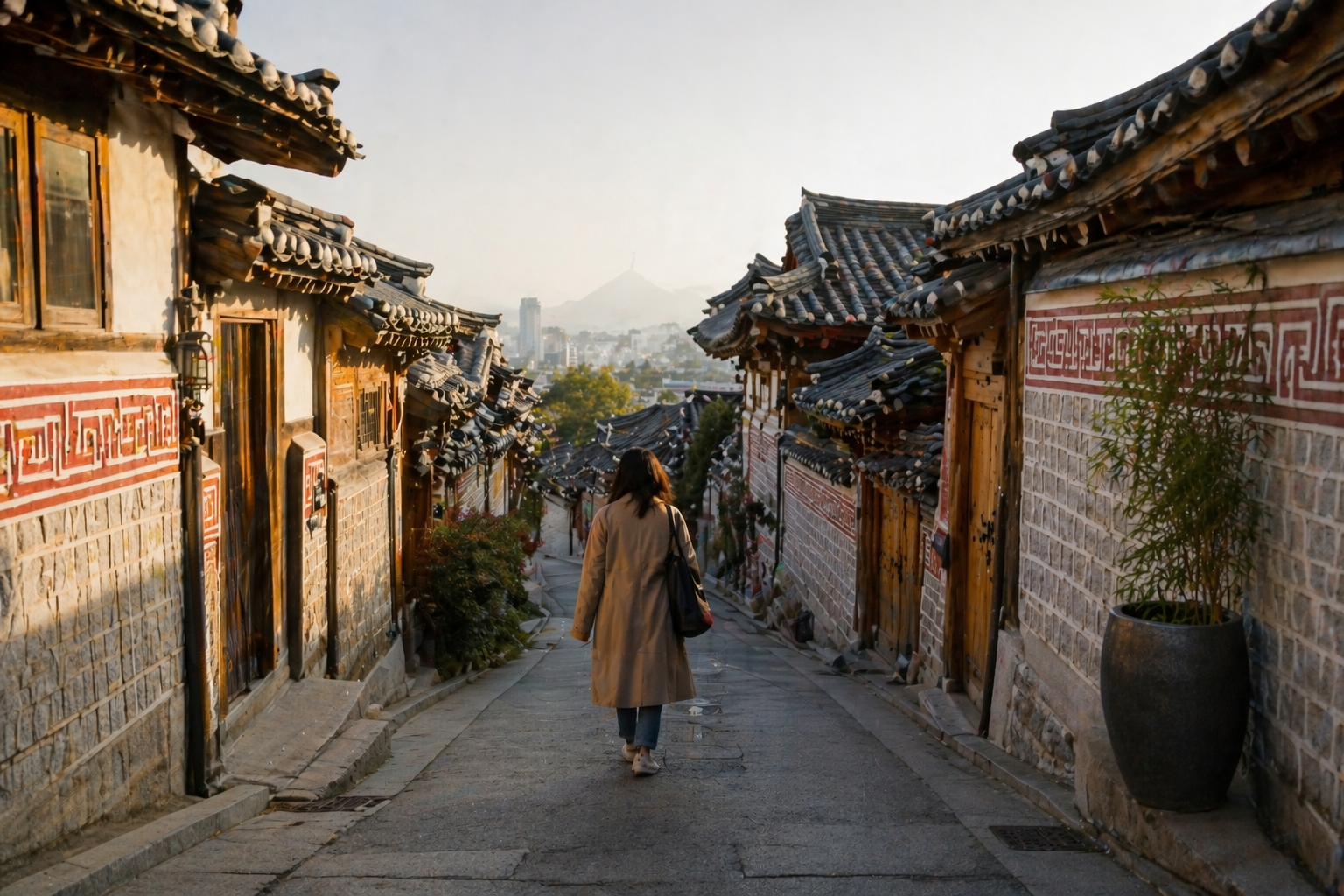
Planning a Seoul 5-day itinerary means making choices about which version of the city you actually want to see. There’s the one that shows up in the reels: idol posters, themed cafés, skincare hauls. And there’s the one that takes a little more effort to find, and pays back considerably more. That second version exists in a hanok alley at seven in the morning, when the light falls sideways across a tiled roof and an elderly resident sweeps the same stone path her grandmother swept decades before her. It exists on a granite ridge above the city, where office workers in full hiking gear eat kimbap with a panoramic view of 25 million people going about their Tuesday. And it exists under a glowing orange tent at midnight, where a pojangmacha owner pours soju into a paper cup and doesn’t ask your name or your number of followers.
This Seoul itinerary covers five days on the ground and is built around the city as a living place, not a backdrop. In that time you can move through 600 years of dynastic history, climb a national park that sits inside the city limits, eat your way from early-morning markets to late-night street food alleys, and still leave with the sense that Seoul has more to give. Because it does. What follows is a day-by-day guide to the neighborhoods, trails, palaces and pojangmacha stalls that make this one of the most rewarding cities in Asia to spend a week in.
Why Seoul Is Worth More Than a Long Weekend
Most travelers who come to Seoul for the first time allocate three days. That’s enough time to see Gyeongbokgung Palace, walk through Myeongdong, and eat tteokbokki on a corner. It’s not enough time to understand the city. Seoul is structurally layered: the Han River divides it into a historic north and a modern south, but within each half there are neighborhoods that feel like completely different cities. The quiet residential lanes of Seochon sit minutes from the political heart of the country. The industrial-chic cafés of Seongsu are a subway ride from ancient royal gardens. Five days gives you enough time to move between those registers and feel the city shift.
Seoul is also genuinely affordable for an international capital of its scale. A subway ride costs under $1.50. A proper meal at a local restaurant rarely exceeds $10. The big-ticket experiences (palaces, national parks, most museums) cost almost nothing. The budget trap, as anyone who has wandered into a K-beauty flagship in Gangnam will tell you, is shopping. Plan accordingly.
The best time to visit is spring (late March to early May) or autumn (September to November). Cherry blossom season in late March draws enormous crowds and raises hotel prices by 20 to 30 percent, but it is genuinely spectacular. Autumn brings clear skies, cool air and maple foliage on the mountain trails that justifies the hype entirely. Summer is hot, humid and rainy. Winter is sharp and dry, not ideal for hiking, but excellent for pojangmacha.
Day 1: The City’s Historic Core: Palaces, Hanoks and the Quiet Hours
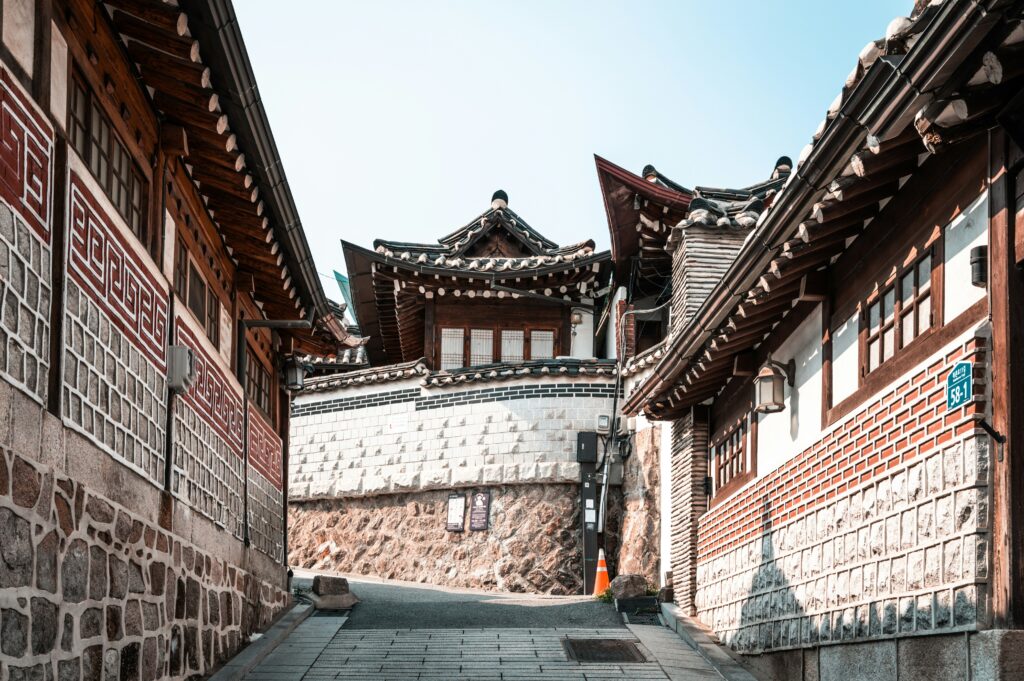
Arrive early enough to reach Bukchon Hanok Village before 9am. This is not a suggestion born from Instagram logic. It’s a practical matter of experience. Since March 2025, the village has restricted tourist access along its most famous lane, Bukchon-ro 11-gil, between 5pm and 10am. The paradox is that the early morning hours, before the restriction lifts and the crowds arrive, are when the neighborhood is at its most authentic. Residents walking to work, cats on stone walls, steam from kitchen windows. The 900-plus traditional hanok homes that remain here were built during the Joseon Dynasty, positioned between the two great palaces of Gyeongbokgung and Changdeokgung as a residential enclave for the aristocratic class. Walking through the upper alleys with the full city visible below, it’s not difficult to understand why this was considered prime real estate six centuries ago.
From Bukchon, walk downhill toward Gyeongbokgung Palace. The main hall, Geunjeongjeon, is where the Joseon kings held formal audiences; the scale of it is designed to communicate power, and it does. The National Folk Museum of Korea sits within the palace grounds and offers free entry, making it one of the best value cultural stops in the city. Book a guided tour in advance if you want the historical layers explained properly; the architecture alone, without context, is beautiful but opaque.
Spend the afternoon in Insadong, the neighborhood immediately south of Bukchon, where traditional crafts shops and tea houses fill the same lanes as modern galleries. Ssamziegil, a courtyard complex built around an old printing quarter, is worth thirty minutes. Then walk west into Seochon, the neighborhood that sits in the shadow of Gyeongbokgung and has managed to stay genuinely residential despite its location. The alleys here are narrower, the cafés fewer, the atmosphere considerably calmer. Poet Yi Sang lived here in the 1930s; his house has been turned into a small museum.
For dinner, head to Gwangjang Market. It is one of the oldest markets in Seoul, open since 1905, and the covered food hall at its center is a masterclass in Korean street food at its most efficient. Mayak kimbap, small sesame-drenched rolls that have earned the nickname “narcotic kimbap” for their addictive quality, are made here by vendors who have been doing the same thing for decades. Bindaetteok, the thick mung bean pancakes fried on cast iron, are best eaten standing up with a plastic cup of makgeolli, the milky rice wine that costs less than a coffee and pairs perfectly.
Day 2: Into the Mountain: Bukhansan National Park
The fact that Seoul contains a national park within its administrative boundaries is either the best urban planning accident in history or proof that the city was always going to grow into something exceptional. Bukhansan National Park covers 78 square kilometers of granite peaks, forested ridges and Buddhist temples in the northern reaches of the city. On clear autumn days, the view from the top of Baegundae Peak (836 meters, the park’s highest point) takes in the full spread of the Seoul metropolitan area below a wall of stone.
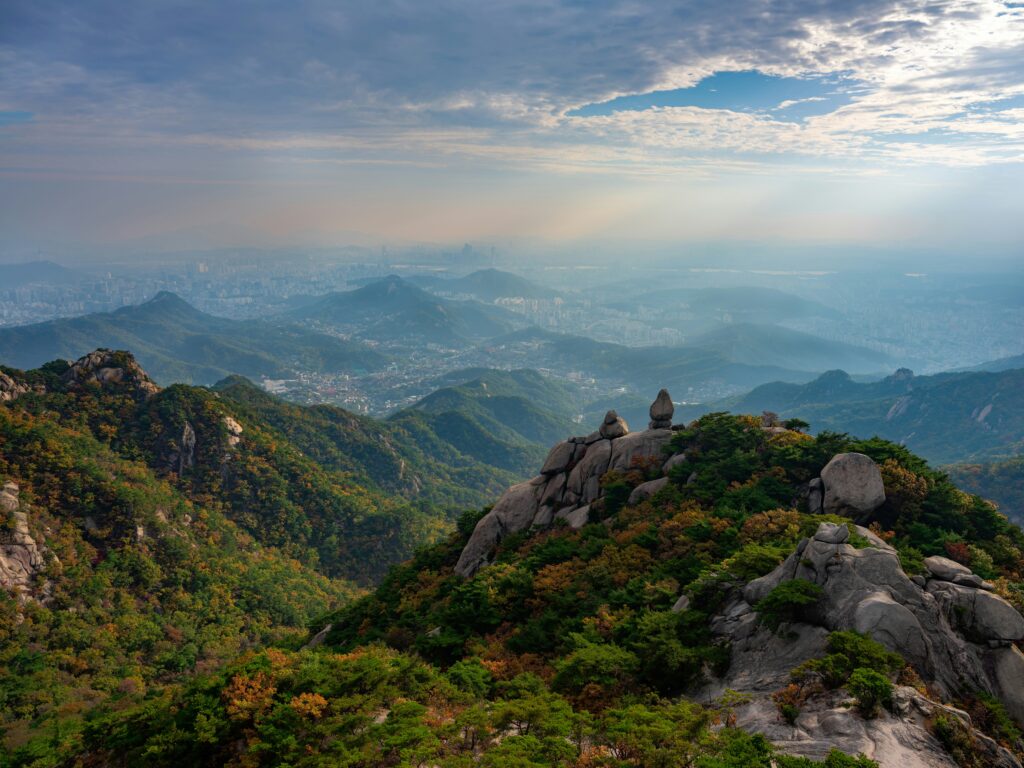
Getting there requires no rental car and no tour operator. Take the subway to Gupabal Station on Line 3, then transfer to bus 704 or 34 toward the Bukhansan Uiryeong entrance. The trailhead is accessible and well-marked. The most popular route to Baegundae follows the Bukhansanseong Fortress course, a trail that winds alongside a stone wall built in 1711 to protect the Joseon capital from invasion. The final section involves steel cable handholds bolted into exposed granite, which sounds more dramatic than it is but does require appropriate footwear. Allow four to five hours for the round trip.
For a less demanding day, the Bogukmun Trail to the fortress gates is roughly two hours return and passes through mixed pine and maple forest with several rest areas. The park is free to enter. It opens at 4am and closes between 4pm and 5pm depending on the season, so plan your start accordingly.
Near the Eunpyeong entrance to the park, the Eunpyeong Hanok Village offers a calmer alternative to Bukchon for anyone who wants more traditional architecture without the crowds. It’s positioned at the foot of the mountain, tends to attract Korean locals rather than international tourists, and still feels like a neighborhood people actually live in. Coming down from a hike and walking through it is one of those accidental sequences that Seoul rewards.
Day 3: The Other Bank: Seongsu, Yeonnam and the Han River
Cross the Han River. The south of Seoul is a different city in almost every way: wider boulevards, newer buildings, a skyline designed in the 1980s and 90s rather than the Joseon period. Gangnam has the flagship stores and the financial energy. But the neighborhood worth your time is Seongsu, on the northern bank of the Han just east of the center, which has gone through one of the more interesting urban transformations in recent Seoul history.
Seongsu was an industrial district of shoe factories, auto repair workshops and printing presses that began attracting artists, designers and independent cafés in the early 2010s. The factories didn’t disappear; they became the buildings. You can still find working shoemakers operating alongside concept stores and gallery spaces in the same block. It’s a less constructed version of the creative neighborhood phenomenon than, say, the deliberately curated Ikseon-dong. The results feel more accidental and more interesting.
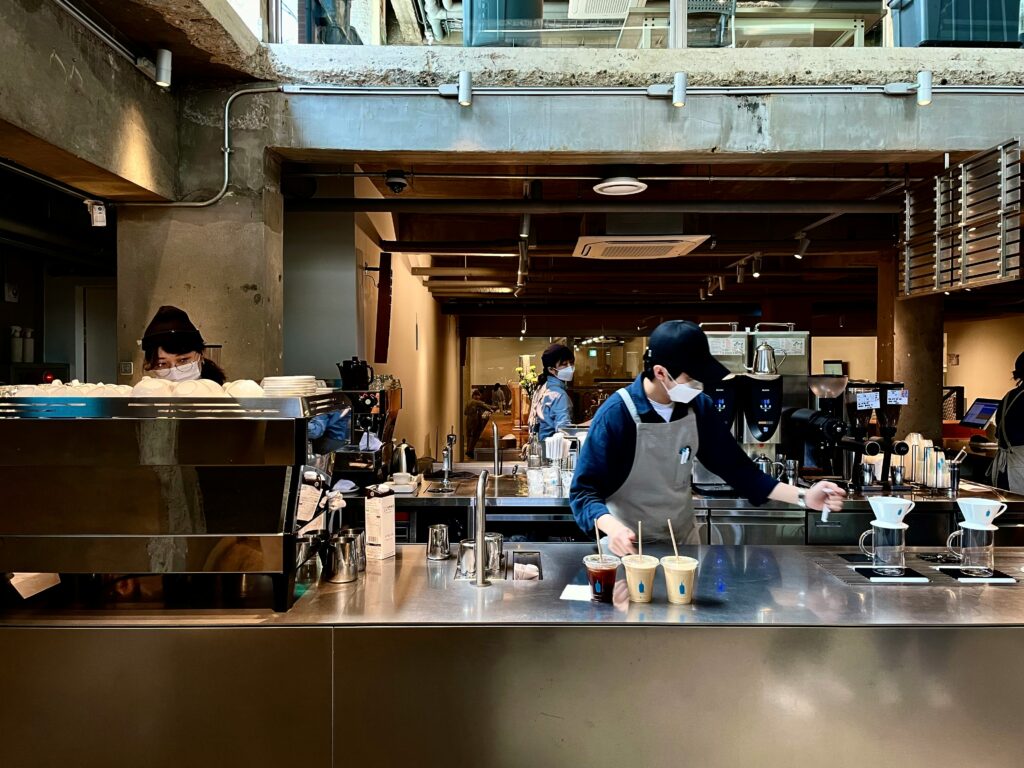
Walk along the Seongsu waterfront in the afternoon and then cross back north via the Ttukseom area, where the Han River Park offers a rare horizontal perspective on the city. Rent a bicycle from one of the many stations along the riverside path and ride west toward Mapo Bridge as the light changes over the water. This is one of those Seoul experiences that costs almost nothing and lands unexpectedly hard.
For the evening, go to Mapo or Yeonnam-dong. The latter sits just north of Hongdae and has a slower pace, with independent restaurants, wine bars, a linear park built along a former railway line called Gyeongui Line Forest Park where locals walk dogs and students read in the evenings.
Day 4: A Seoul Street Food Itinerary, Day to Night
Dedicate the fourth day to eating. Not restaurant-hopping in the Instagram sense. Eating the way the city actually feeds itself, from morning through to the late hours.
Start at Tongin Market in the morning, near Gyeongbokgung. The market operates a system where visitors buy old copper coins at the entrance and use them to select small dishes from the different stalls inside. It sounds gimmicky, but the food (japchae, bindaetteok, japjae, hobakjeon) is genuinely good, and the format forces you to try things you wouldn’t necessarily order from a menu.
Lunch in Mangwon Market, a local market near the Han River in Mapo-gu that draws significantly fewer tourists than Gwangjang. Grilled meats, fresh vegetables, seafood pancakes. The market is in a residential neighborhood and the contrast between it and the tourist-facing food experiences elsewhere in the city is instructive.
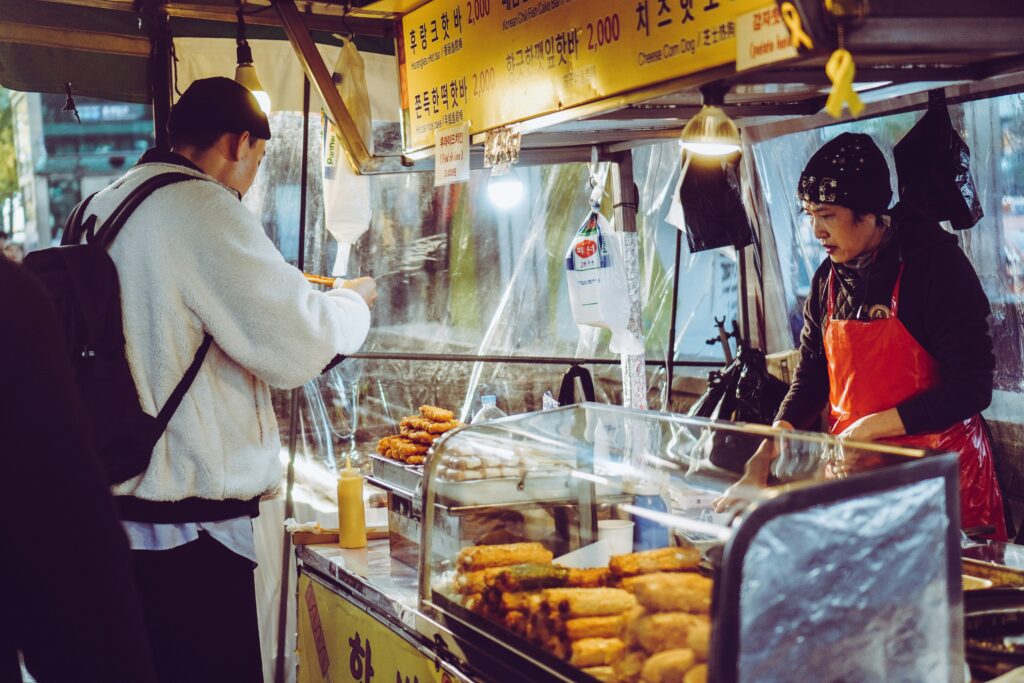
In the evening, make your way to Jongno 3-ga Station. Exit 5 or 6 drops you directly onto the pojangmacha alley, a stretch of tented street stalls that comes to life after 5pm and doesn’t stop until midnight. These orange and red canvas stalls are fixtures of the Korean nightlife imagination precisely because they represent a social space with almost no equivalents elsewhere: informal, egalitarian, designed for strangers to become temporary acquaintances over shared plates and soju. The menu is standard across most stalls: tteokbokki, odeng (fish cakes on skewers served in warm broth), gyeran-mari (rolled omelette) and grilled gizzards. The prices are low, around 1,000 to 4,000 KRW per dish, and most stalls accept cards, though carrying small bills is advisable.
Sit down, point at something, and let the evening take care of itself.
Day 5: Slow Seoul: Changdeokgung, Ikseondong and a Final Morning
Save Changdeokgung Palace and its Secret Garden for the last day. Changdeokgung is UNESCO-listed and widely considered the most beautiful of Seoul’s five royal palaces and less frequently visited than Gyeongbokgung, which makes the experience considerably more intimate. The Huwon, the rear garden, requires a separate ticket and is only accessible via guided tour, but the tour is worth booking in advance. The garden covers 300,000 square meters of ponds, pavilions, ancient trees and landscape design that has been largely unchanged for centuries.
From Changdeokgung, walk south into Ikseon-dong. This is a 1920s working-class hanok district that has been converted into one of Seoul’s most thoughtfully preserved commercial streets, where traditional architecture houses wine bars, independent bakeries and small galleries. It sits between the grand dynastic monuments to the north and the modern city to the south, and somehow manages to belong to both. Have a final coffee here and resist the urge to turn it into content.
Before leaving, note that the Dongdaemun Design Plaza area, designed by Zaha Hadid and opened in 2014, is fifteen minutes east by subway. It’s neither palace nor mountain nor street food market. It’s Seoul presenting itself as a city with ambitions that extend past its own history, which is its own kind of statement.
Practical Information for the Seoul 5-Day Itinerary
Five days in Seoul can be planned in many different ways depending on your travel style and budget. The practical details below apply across the board; if you want a fully personalized day-by-day plan built around how you specifically like to travel, the Traveneur Trip Planner does that for free in a couple of minutes.
Getting there. Seoul is served by two airports: Incheon International (ICN), one of the best-connected airports in Asia, and Gimpo (GMP), used primarily for domestic and regional flights. From Incheon, the AREX express train reaches Seoul Station in 43 minutes and costs around $9. Avoid taxis from the airport for most travelers; they work fine but are significantly more expensive.
Getting around. Seoul’s subway system is extensive, cheap and easy to use. A T-money card (rechargeable transit card, available at any convenience store or subway machine) costs around $2.50 to purchase and enables free transfers between subway and bus within 30 minutes. Single rides cost under $1.50. For longer stays or heavier subway use, the Climate Card tourist pass offers unlimited rides.
Currency and costs. South Korea uses the Korean Won (KRW). As of 2026, the exchange rate sits at approximately 1,350 KRW to the dollar. Budget travelers can manage the day-to-day on $50 to $70 per day excluding accommodation. Mid-range travelers with a mix of guesthouses and restaurants should budget $120 to $200 per day. The key variables are accommodation and shopping. Food and transport will almost always come in under expectations.
Where to stay. For the historic center and easy access to Bukchon, Insadong and Gyeongbokgung, base yourself in Jongno-gu. For nightlife, Hongdae (Mapo-gu) is the standard recommendation and remains reliable; hostels here are well-run and the neighborhood is walkable at all hours. Seongsu has a growing number of boutique hotels for travelers who want the creative district feel without Hongdae’s volume. For mid-range options, the Myeongdong area offers value and central positioning; for upscale stays, the Gangnam and Itaewon zones have the major international brands.
Language. Korean is the language of Seoul, and while English signage is widespread in tourist areas and the subway system, it drops off significantly outside those zones. Download Papago (Naver’s translation app, superior to Google Translate for Korean) before landing. KakaoMap is the preferred navigation app locally and handles transit routing far better than Google Maps in Seoul.
Safety. Seoul consistently ranks among the safest large cities in the world for travelers. Solo travel (including solo female travel) is generally straightforward, including late at night. Petty crime is rare. Standard city awareness applies, particularly around the busier nightlife areas late on weekends.
Visa. Many nationalities, including US, EU, UK, Canadian and Australian passport holders, can enter South Korea visa-free for stays of up to 90 days. Check the Korea Tourism Organization’s official visa guide for current requirements.
Useful apps. Papago (translation), KakaoMap (navigation), Naver Map (local alternatives and reviews), KakaoTalk (messaging, used universally in Korea), Creatrip or Trazy (tour and experience booking with English support).
Related Post: The Best Time to Visit Southeast Asia: A Climate and Seasons Guide
Build Your Own Seoul Itinerary in Minutes
The framework above works well as a starting point, but the best Seoul itinerary is the one calibrated to how you actually travel. A budget backpacker spending five days here will move through a completely different city than a comfort seeker with the same amount of time. Same neighborhoods, same trails, same pojangmacha alleys — completely different trip.

The Traveneur Trip Planner is a free AI tool that builds a complete, day-by-day itinerary for Seoul (or any destination) based on three inputs: where you’re going, how many days you have and how you like to travel. You choose from four travel styles: Budget Backpacker, Independent Traveler, Comfort Seeker and Adventure Traveler. The itinerary it builds is genuinely different depending on which one you pick. Not a generic top-ten list. An actual plan with real neighborhoods, real timing and real advice shaped around how a day in that city actually flows.
If you want a version of this Seoul itinerary built around your pace and your budget, it takes about two minutes.
The Seoul That Stays With You
The city that lingers is not the one on the album covers. It’s the grandmother at a hanok gate who nods when you bow. The hiker who shares a thermos of barley tea at the Bukhansan summit without speaking. The pojangmacha owner who refills your cup without being asked and names the price only when you’re standing to leave. Seoul is a city with a significant cultural presence and, beneath the exported version of itself, a city that continues to do what all great cities do: get on with the business of being lived in, with tremendous seriousness and surprising warmth.
Five days is enough to catch the beginning of that understanding. Come back for more.
Plan your trip with the Korea Tourism Organization for official information on visas, entry requirements and current travel advisories. For trail conditions at Bukhansan National Park, check the Korea National Park Service before your hike.