Things to Do in Mexico City Between World Cup 2026 Games: The Neighborhoods, Markets and Day Trips Beyond Teotihuacan
Things to do in Mexico City between World Cup 2026 games go considerably further than the Zócalo and the pyramids at Teotihuacan. Estadio Azteca hosts 6 matches during the tournament, including the tournament’s opening match on June 11, Mexico vs Argentina on June 19 and a Round of 16 on July 5, making Mexico City the venue for one of the most anticipated fixtures in the entire World Cup. The stadium is the only one in history to have hosted two World Cup Finals, in 1970 and 1986, and carries that weight in the way only a place can when millions of people have had the same significant experience inside it.
Mexico City is a metropolitan area of 22 million people that operates as one of the most culturally dense cities in the Western Hemisphere. The pre-Columbian, colonial, modernist and contemporary layers of the city sit on top of each other without apology in a way that requires time to read correctly. The Roma and Condesa neighborhoods have become internationally recognized for their restaurant culture. The Centro Histórico contains 1,400 classified colonial-era buildings within a single square kilometer. The markets sell everything from huitlacoche fungus to pirated DVDs to custom-made shoes. The Metro runs 226 stations at 5 pesos per ride. All of this is available within a city that is, for international visitors with dollars or euros in their pocket, extraordinarily affordable.
Getting to Estadio Azteca
Estadio Azteca sits at Calzada de Tlalpan 3465 in the Coyoacán borough, south of the city center. The Metro Line 2 (Blue Line) runs to General Anaya Station, from which a free match-day shuttle covers the remaining distance to the stadium. Alternatively, the Metro Line 2 to Tasqueña, followed by the Tren Ligero (light rail) to Estadio Azteca Station, is a direct connection that most locals use. A single Metro ride costs 5 pesos ($0.30). The complete Metro system charges the same price regardless of distance.
Uber operates reliably in Mexico City and costs $3 to $8 for most in-city trips. Post-match, walk away from the stadium before requesting a ride; surge pricing at the gates is standard after large events.
Roma and Condesa: The Neighborhoods the World Discovered
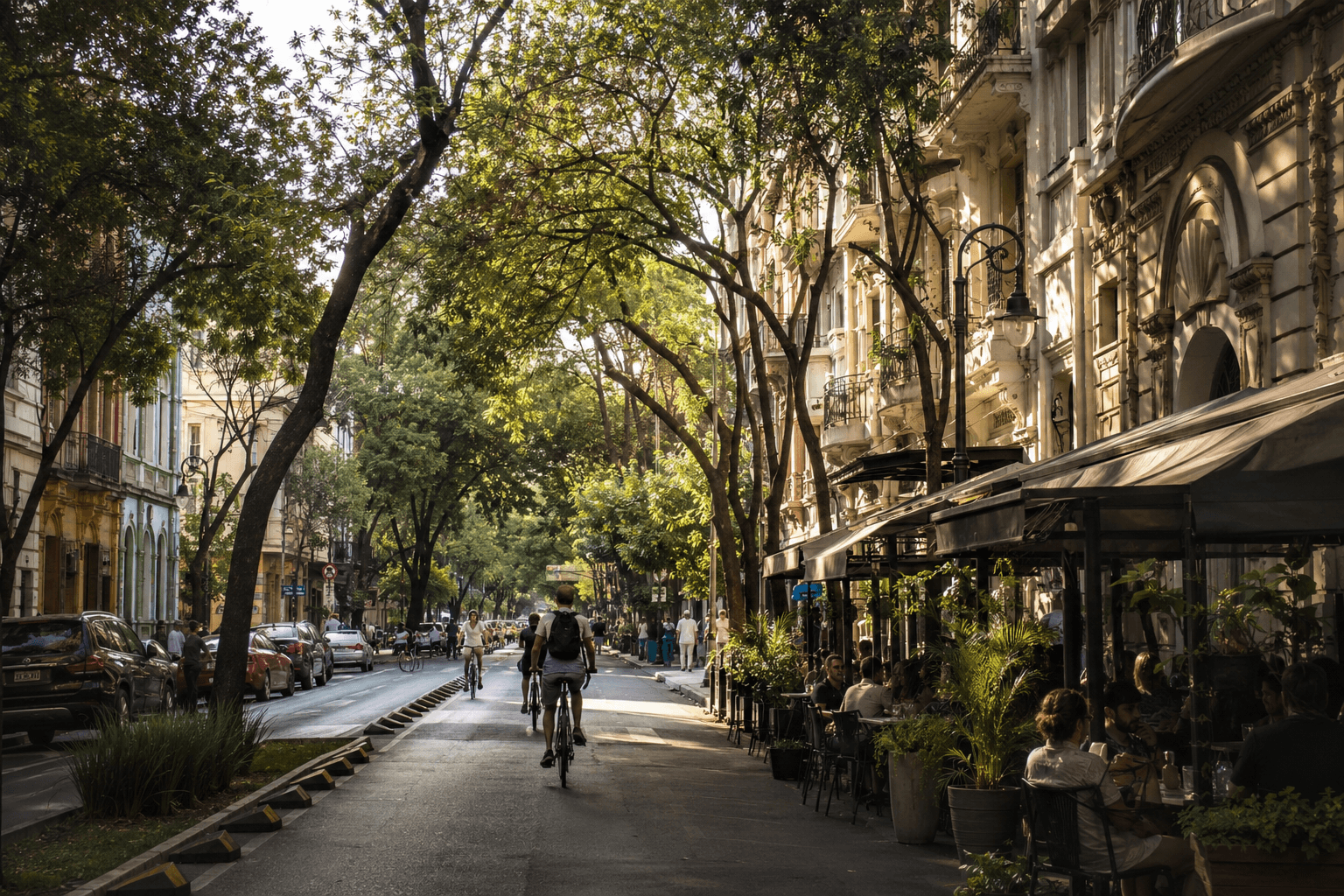
Roma Norte and Condesa sit adjacent to each other west of the historic center, separated by Avenida Ámsterdam, a tree-lined oval boulevard built around a former horse racing track. The two neighborhoods together hold the highest concentration of independent restaurants, cafés and bars in the city and have been the subject of international food coverage for a decade without losing the residential character that made them interesting in the first place.
Mercado de Medellín at Coahuila 45 is a covered neighborhood market serving Roma’s daily food needs: meat, fish, fresh produce, prepared food counters, juice vendors. The torta de cochinita pibil from the counter at the back of the market costs 35 pesos and is better than anything on the restaurant streets outside. It opens at 7am.
For the restaurant side: Contramar on Calle Durango is the Roma reference point for seafood, specifically the tuna tostadas and the grilled red snapper prepared two ways on the same fish. A lunch reservation is required and books two to three weeks out. Rosetta on Calle Colima, in a Porfiriato-era mansion, holds one of the city’s most consistent kitchen records over a decade of operation. Mercado Roma at Querétaro 225 is a food hall that opened in 2014 and covers craft beer, Mexican regional cooking and artisanal products in a format that has since been replicated across the city; the original remains the best.
Condesa’s Parque México along Avenida Ámsterdam runs on Saturday and Sunday mornings as an informal gathering point where the neighborhood walks dogs, reads newspapers and eats breakfast at the café tables that face the park. It is one of the more pleasant places in the city to do nothing in particular.
Centro Histórico: The Colonial City at Full Scale
The Centro Histórico covers the island of Tenochtitlán that the Mexica built in a lake in 1325 and that the Spanish systematically dismantled and rebuilt after 1521, using the stones of the temples to construct a colonial city directly on top of what had been there before. The lake was drained over three centuries and the city sank into the soft lake bed, which explains why most colonial buildings in the center tilt visibly in ways that seem alarming until you understand they have been tilting for 200 years without falling.
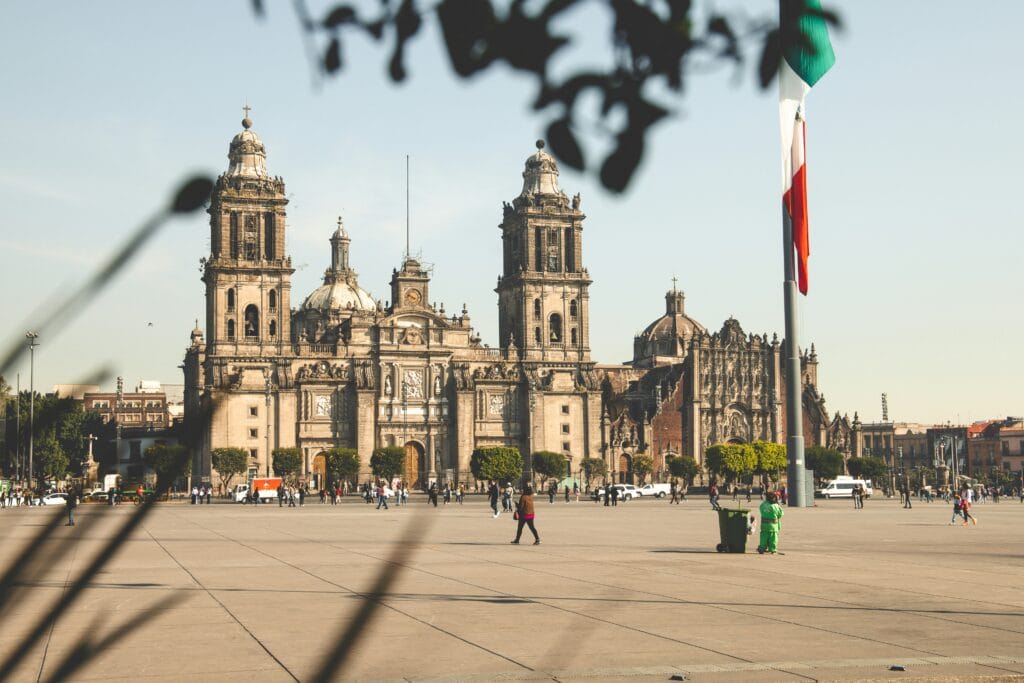
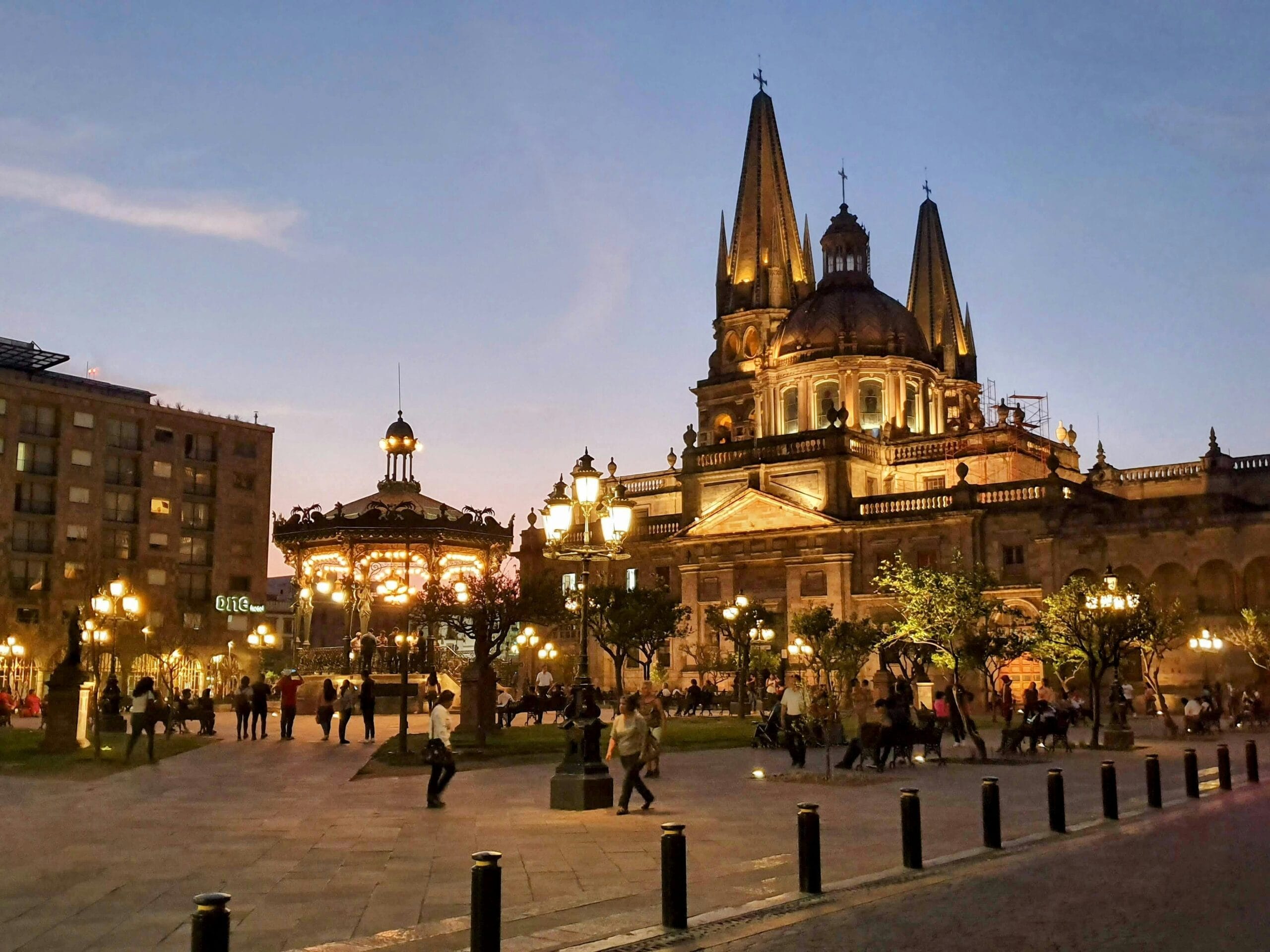
The Zócalo, Mexico City’s central square, is the second-largest city square in the world after Tiananmen. The Metropolitan Cathedral on its north side, begun in 1573 and completed in 1813, shows 240 years of architectural style changes in its facade. The Palacio Nacional on the east side holds Diego Rivera’s mural History of Mexico, a 1,200-square-meter panorama of Mexican history from pre-Columbian civilization through the Revolution, painted between 1929 and 1951. Entry to both the cathedral and the Palacio Nacional is free.
The Museo del Templo Mayor at República de Guatemala 60 sits on the excavated foundations of the main Aztec temple, discovered under the Centro’s streets during utility work in 1978. The museum holds the artifacts recovered from the site, including the massive Coyolxauhqui stone, and is one of the most serious archaeological museums in Mexico. Admission is 85 pesos ($5). Free on Sundays.
Mercado de la Merced, 15 minutes east of the Zócalo by Metro, is the largest traditional market in the city and the place where the Centro’s food culture is least filtered for visitors: 100,000 square meters of covered market stalls selling herbs, chiles, prepared food, hardware, clothing and everything else that a city of 22 million people needs on a daily basis.
Coyoacán: Frida Kahlo and the City’s Village Neighborhood
Coyoacán, south of the center near the stadium, was an independent town absorbed by Mexico City’s growth and has retained a village atmosphere that the surrounding urban density has somehow not dissolved. The cobblestone streets around the Jardín Centenario and the Jardín Hidalgo hold cafés, bookshops and weekend market stalls in a scale that feels manageable after the Centro’s intensity.
The Museo Frida Kahlo at Londres 247, known as La Casa Azul for its cobalt blue exterior, is the house where Kahlo was born, spent much of her life, and died in 1954. The collection includes her personal belongings, her studio, her medical corsets and a selection of her paintings in the context of the house and garden she inhabited. Advance tickets are essential and sell out weeks ahead; book at museofridakahlo.org.mx. Admission is 270 pesos ($16).
The Museo León Trotsky at Río Churubusco 410, three blocks away, is the fortified house where Trotsky lived in exile from 1937 until his assassination in 1940. The house is preserved largely as it was at the time of his death, including the study where he was killed. Admission is 60 pesos ($3.50). Less visited than the Kahlo museum and worth the same amount of time.
Day Trip: Puebla
Puebla sits 130 kilometers east of Mexico City on the autopista, a 1.5 to 2-hour bus ride from TAPO bus terminal in the eastern part of the city. It is one of the best-preserved colonial cities in Mexico, a UNESCO World Heritage Site, and the origin of two dishes that have spread far beyond Mexico: mole poblano and chiles en nogada.
The historic center concentrates Baroque churches and tile-covered buildings in a compact walkable area. The Capilla del Rosario inside the Iglesia de Santo Domingo is the most elaborate example of Mexican Baroque architecture in the country, its interior covered floor to ceiling in gilded stucco, painted tiles and carved wood. The Mercado de Sabores on Calle 16 de Septiembre serves the city’s food culture in an accessible setting: cemitas (Pueblan sandwiches on sesame rolls), mole and memelas.
ADO buses run from TAPO to Puebla every 20 to 30 minutes from 6am, fare around 200 pesos ($12) each way. The journey is reliable and comfortable.
Day Trip: Teotihuacan
Every guide to Mexico City mentions Teotihuacan and it belongs here too, but with a specific recommendation: go early, on a weekday, and in the reverse direction from most visitors.
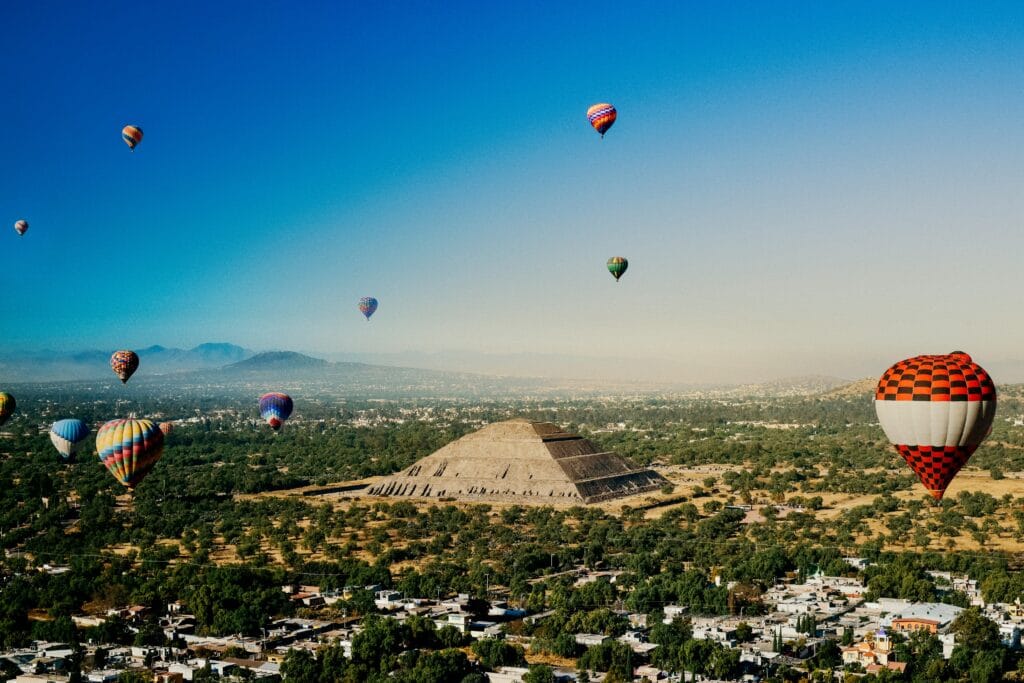
The site is open at 8am. The first bus from the Terminal Central del Norte runs before 7am; the journey takes about an hour. Arriving at 8:15am gives you the first hour of daylight with significantly fewer people on the pyramids. The Avenue of the Dead runs north from the Ciudadela to the Pyramid of the Moon; most visitors walk north. Walk south first. The Ciudadela complex and the Pyramid of Quetzalcoatl at the southern end are the most detailed and least crowded parts of the site and reward the reversal of the standard route.
The Pyramid of the Sun is the third-largest pyramid in the world by volume. Climbing it is permitted. The view from the top covers the full site and the surrounding Valle de Teotihuacan to the mountains. Admission is 90 pesos ($5.30). Bring water and sun protection; the site is fully exposed.
Practical Notes for World Cup Fans in Mexico City
Getting around: The Metro is the fastest and cheapest urban transit system at any World Cup host city. Five pesos per ride, 226 stations, running from 5am to midnight. Download Google Maps with Mexico City offline for transit routing. Uber covers the gaps reliably at $3 to $8 per trip. InDrive, available in Mexico City, often offers lower fares for longer routes.
Accommodation: Mexico City averages around $267 per night for mid-range hotels during the tournament, making it one of the more affordable host cities. Roma, Condesa and Polanco offer the best neighborhood experience. The Centro Histórico has good budget options. Booking.com and Airbnb both have strong inventory.
Money: The Mexican peso is the currency. Carry cash; many local markets, taquerias and street vendors are cash only. Bank ATMs in Roma, Condesa and the Centro are safe and offer good exchange rates. Avoid standalone ATMs in tourist areas that charge high fees.
Safety: The tourist neighborhoods, Roma, Condesa, Polanco, Coyoacán and the Centro Histórico, are safe for visitors with standard urban awareness. Keep phones and cameras not visible in crowded public spaces. Use Uber rather than street taxis, which do not use meters. Emergency number: 911.
Language: Spanish is the default everywhere outside of tourist-facing restaurants and hotels. A few basic phrases in Spanish open more doors than in most cities because Mexico City’s daily life runs at a scale and pace where speaking directly is expected. Google Translate with Spanish offline handles menus, signs and market conversations adequately.
Connectivity: Airalo for Mexico eSIM. Telcel is the dominant carrier; their tourist SIM is available at the airport.
Plan Your Mexico City Days
The Traveneur Trip Planner builds a complete Mexico City itinerary around your travel style in two minutes. Budget Backpacker, Independent Traveler, Comfort Seeker or Adventure Traveler: the same city produces four entirely different trips, which is accurate to how Mexico City actually works.
The City That Changes Scale on You
Mexico City has a way of becoming larger the longer you stay. The first day, the scale is overwhelming. By the third day, you have neighborhoods, preferred Metro stops, a taqueria you consider yours. By the fifth day, the Centro and Roma feel like two separate cities and Coyoacán feels like a third. Fans who arrive for a match and stay three or four days between games will leave with the beginning of a relationship with a city that very few people understand from the outside and that very few people who spend real time in it are willing to leave quickly. That’s the particular quality of Mexico City. It doesn’t resolve into a simple postcard. It just keeps opening.
Official Mexico City tourism: cdmx.gob.mx/turismo. Frida Kahlo Museum tickets: museofridakahlo.org.mx. Teotihuacan information: inah.gob.mx. Match schedule: fifa.com/worldcup.