What to Do in New York Between World Cup 2026 Games: The Boroughs, Day Trips and the City Beyond the Obvious
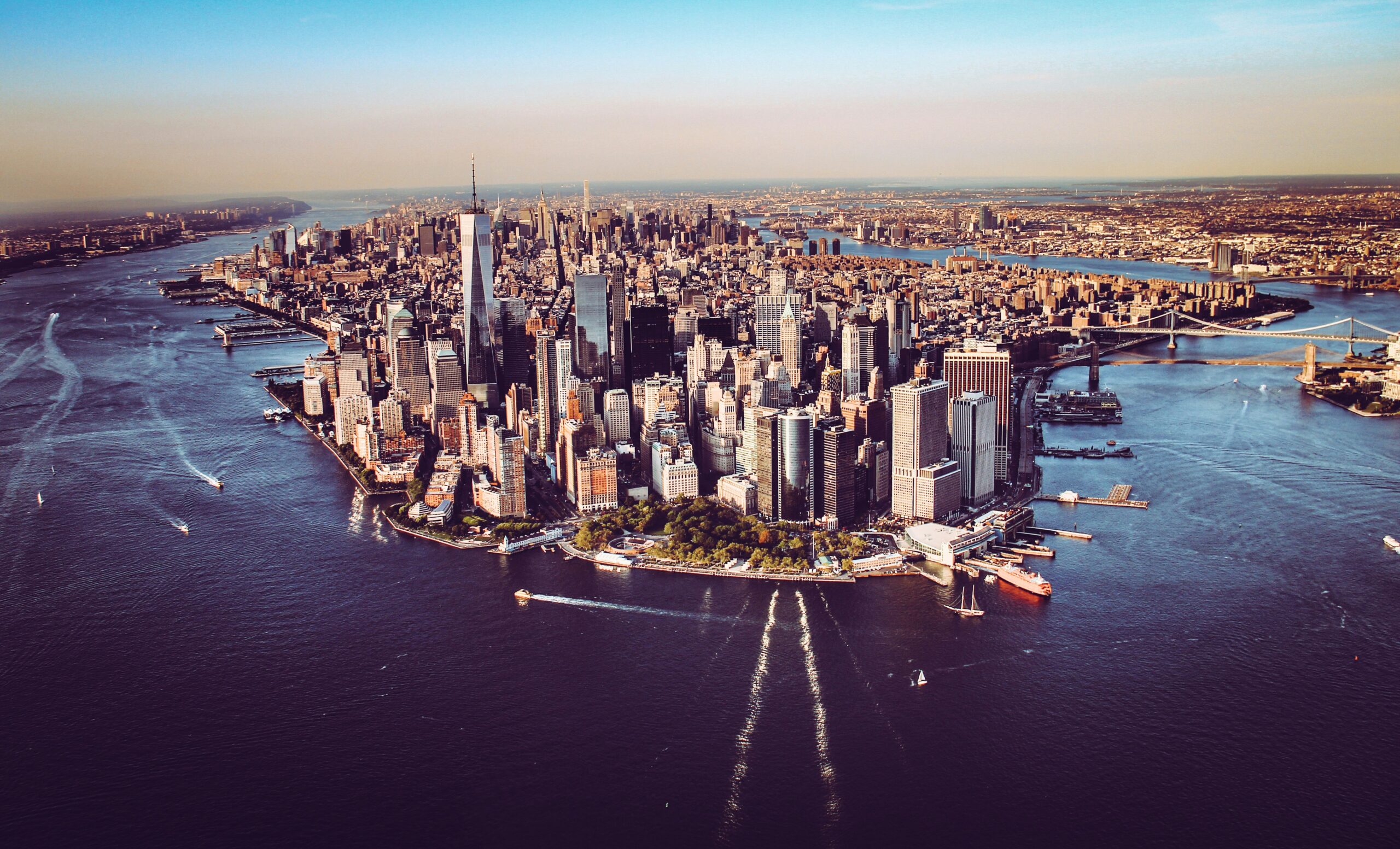
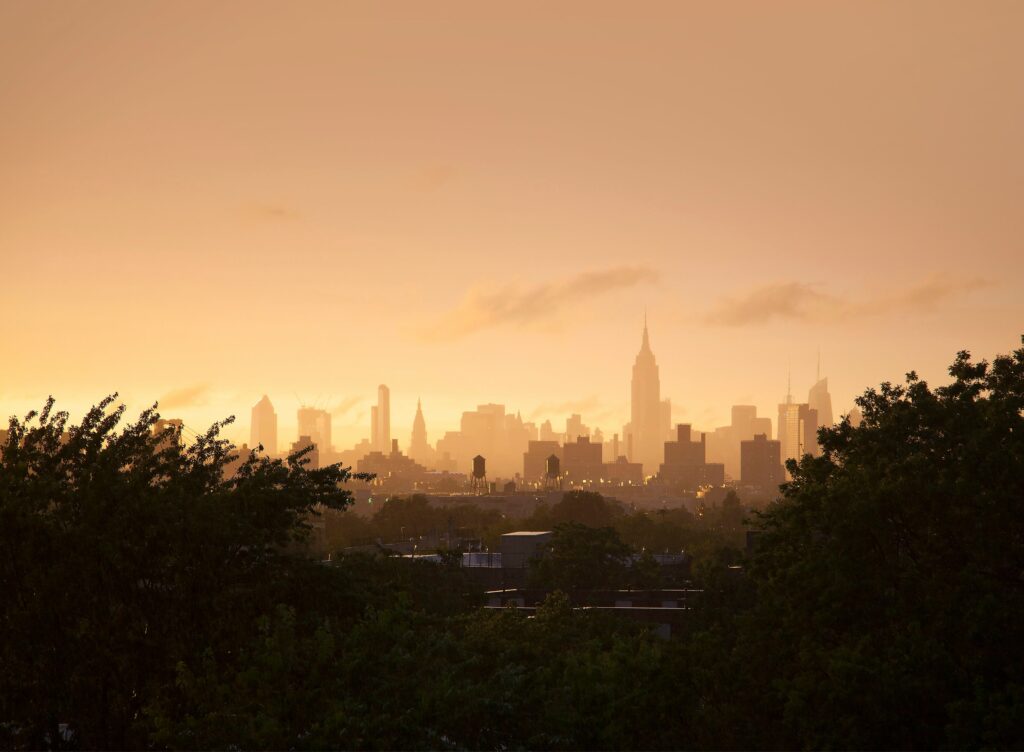
What to do in New York between World Cup 2026 games is a question that answers itself badly if you let Manhattan do the talking. Times Square, the Empire State Building, a walk across the Brooklyn Bridge: all fine, none of them the reason New York is one of the most interesting cities in the world. The reason is the other four boroughs, the ones where the city actually lives, eats, argues and conducts its daily business in over 200 languages without waiting for anyone to put it on a map.
MetLife Stadium in East Rutherford, New Jersey, hosts eight matches during the tournament: five group stage fixtures including Brazil vs Morocco (June 13), France vs Senegal (June 16) and England’s match on June 27, plus a Round of 32, a Round of 16 and the World Cup Final on July 19. The Final alone makes New York the de facto center of gravity for the entire tournament. Fans arriving for group stage matches and staying through the knockout rounds will have days between games. This guide is for those days.
The New York worth finding is not in the guidebook’s front section. It’s in Queens, where the 7 subway line operates as an accidental tour of the world’s cuisines across twelve elevated stops. It’s in Brooklyn’s neighborhoods that shifted from industrial to residential without ever becoming generic. It’s two hours north by train, in the Hudson Valley, where the Catskill Mountains start and the city’s noise stops completely. What follows is a borough-by-borough and day-trip guide built around the specific schedule of someone with two or three days between World Cup matches and a genuine curiosity about where they’ve landed.
Getting to MetLife Stadium and Back
MetLife Stadium sits in East Rutherford, New Jersey, 10 miles west of Midtown Manhattan. On match days, NJ Transit runs direct train service from Penn Station in Manhattan to Meadowlands Station, a short walk from the stadium entrance. Journey time is approximately 35 to 40 minutes. Trains run frequently before kickoff and immediately after the final whistle. Buy tickets in advance through the NJ Transit app or at Penn Station machines; the service gets busy and paper queues move slowly.
Driving is possible but parking sells out and traffic after the Final in particular will be severe. For 8 of 104 World Cup matches including the biggest one in the tournament, transit is the right call every time.
Queens: The Best Food Borough in America, Accessible by Subway
If you’re looking for a single afternoon experience that captures something true about New York, take the 7 train from Times Square to Flushing.
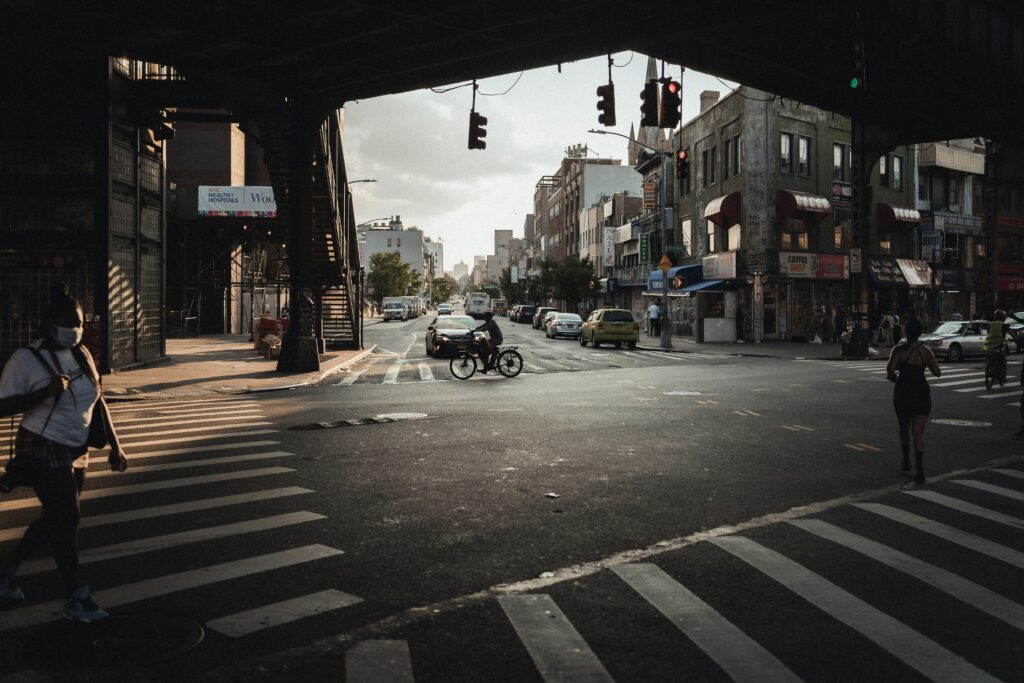
The 7 line runs elevated above Roosevelt Avenue through the borough of Queens, and its 22 stations pass through a sequence of immigrant neighborhoods that have been building their own food economies for decades. Jackson Heights holds one of the most culturally diverse concentrations of people on earth: Indian, Bangladeshi, Nepali, Colombian, Ecuadorian, Mexican, Tibetan communities all operating within a few blocks of each other. Flushing, at the end of the line, is home to a Chinatown that most food writers consider more ambitious and more varied than Manhattan’s. At the Flushing Food Court on Main Street, regional Chinese cooking from Sichuan, Hunan, Shanghai and Fujian sits alongside Korean, Malaysian and Taiwanese food vendors, most of them cash only, all of them significantly cheaper than anything in Manhattan.
The method: take the 7 toward Flushing. Get off at 82nd Street-Jackson Heights for lunch. Walk Roosevelt Avenue. Order something from a menu you can’t fully read. Get back on the 7 and ride to the end of the line for dessert in Flushing. The entire afternoon costs under $20 and covers more culinary ground than a week of Manhattan restaurants.
Flushing is home to almost 220,000 people and nearly 80 percent of its population is Asian, making its food scene one of the most concentrated in the city. A few stations back in Corona, fresh-pressed tortillas and slow-cooked birria welcome visitors; in Jackson Heights, the air is fragrant with Nepali spices and Indian jalebi frying on the street.
The 7 train costs $2.90 per ride with an OMNY contactless tap or MetroCard. No tour guide required. Anthony Bourdain filmed an episode of Parts Unknown here specifically because it is, straightforwardly, one of the best food experiences in the United States.
Flushing Meadows Corona Park sits just off the 7 line and is worth an hour of your time regardless of food interest. The park has a zoo, science museum, marina, two lakes, soccer pitches and cricket fields, plus the Unisphere, a 140-foot steel globe built for the 1964 World’s Fair. For a World Cup crowd, standing next to a giant steel globe in a park where people are playing football on every available patch of grass has a particular resonance.
Brooklyn: Three Neighborhoods Worth the Subway Ride
Brooklyn is large enough to be its own city and contains multitudes. Three neighborhoods repay a day’s attention without requiring a car or a plan.
Bushwick is the neighborhood for anyone interested in street art at scale. The Bushwick Collective covers several blocks of the neighborhood with large-format murals commissioned from artists across the world; the collection updates continuously and is genuinely worth walking slowly. The surrounding blocks hold independent coffee shops, record stores and a restaurant scene that runs toward the informal end of the spectrum. Take the L or J/M/Z train to Myrtle-Broadway or Jefferson Street.
Red Hook sits at the waterfront in southwest Brooklyn, accessible by the B61 bus from Smith-9th Streets on the F/G or by ferry from Manhattan’s Wall Street pier. It’s one of the few neighborhoods in Brooklyn that stayed genuinely local rather than turning over to higher rents: a mix of warehouses, studios, bodegas and the Red Hook Ballfields, where on summer weekends Latin American food vendors set up along the perimeter and serve pupusas, tamales and huaraches to a crowd that is mostly neighborhood rather than tourist. The area around Red Hook and the nearby Sunset Park has some of the best Mexican taquerias along 5th Avenue and an authentic Chinatown along 8th Avenue, making it a natural extension of a Brooklyn food day.
Williamsburg needs less introduction but still earns its place. The south side of Williamsburg, particularly around Broadway and Graham Avenue, runs closer to its original Puerto Rican and Dominican character than the north side, which has been the subject of every gentrification think-piece since 2005. The food on the south side is better and cheaper than anything on Bedford Avenue. Take the L train to Lorimer Street.
Manhattan Without the Obvious
For fans who want to cover the expected ground without losing an entire day to it, the following approach works: start at the High Line at 7am when it’s empty, walk south through Chelsea to the Whitney Museum (open from 10:30am, no advance booking required for general admission), cross into the West Village for lunch, walk east through SoHo to Chinatown for the afternoon, and finish at the southern tip of Manhattan for the Staten Island Ferry at dusk. The ferry is free, takes 25 minutes each way, and offers the best view of the Manhattan skyline available to anyone without a helicopter.
The High Line in July is significantly more pleasant at 7am than at noon. The same principle applies to the Brooklyn Bridge: walk it before 8am and it belongs to you; cross it at 11am and you’re part of a queue.
For something genuinely off the Manhattan tourist circuit, the New York Public Library’s Rose Main Reading Room on 42nd Street requires no ticket and no appointment. Walk in, go upstairs, sit at a long wooden table under a painted ceiling and spend twenty minutes doing nothing. It is, per square foot, one of the most beautiful rooms in the city.
Day Trip: Hudson Valley and the Catskills
For fans with two or three days between matches, leaving the city is the right move. The Hudson Valley starts about an hour north of Penn Station by Amtrak, and what it offers is the opposite of New York: space, quiet, farmland, mountains and a food culture built on proximity to ingredients rather than proximity to investors.
Hudson, a city at the foot of the Catskill Mountains along the Hudson River, has become a destination for New Yorkers seeking weekend escapes. Warren Street runs through the center with boutique shops, farm-to-table restaurants and antique stores, while the surrounding valley offers hiking, river kayaking and sweeping mountain views.
Getting there: Amtrak from Penn Station to Hudson takes approximately two hours. The Empire Service and other trains run multiple times daily; book at amtrak.com. From Hudson station, an Uber or local taxi covers the 8 miles to Catskill town or surrounding areas.
For a day trip rather than an overnight, Cold Spring is the better option. Metro-North’s Hudson Line runs from Grand Central Terminal to Cold Spring in about one hour and fifteen minutes, with round-trip fares typically $14 to $22 depending on peak or off-peak hours. Cold Spring is a small Hudson Highlands town with access to the Hudson River waterfront, hiking trails on Storm King Mountain and a main street that manages to be charming without being self-conscious about it.
If you want mountains rather than a river town: the Catskills proper require a bus from Port Authority or Amtrak to Kingston, then a local taxi or rideshare into the hills. The Catskill Flyer, operated by the Catskill Mountain Railroad, runs vintage train rides through the Catskills on select weekends May through September, departing Kingston’s Stockade District for a 90-minute round trip through 1600s-era farmland and mountain forest. Tickets start at $20. It’s not transport; it’s the point.
Practical Notes for World Cup Fans in New York
Accommodation and costs: New York is the most expensive host city in the tournament for accommodation. Mid-range hotels in New York are showing rates of $400 to $600 per night during the tournament window. The practical alternatives: book in Newark or Jersey City (30 percent cheaper, direct PATH train to Manhattan in 20 minutes), or in the outer boroughs (Brooklyn and Queens run noticeably lower than Manhattan for equivalent quality). Book with free cancellation via Booking.com or Airbnb immediately if you haven’t done so; availability in central Manhattan is critically low.
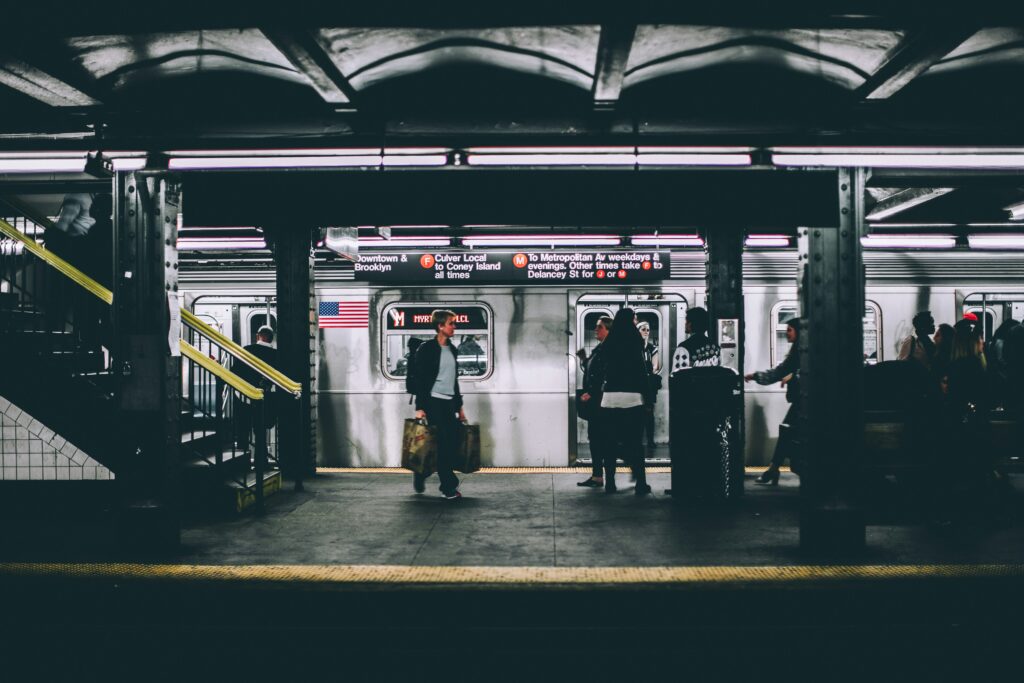
Getting around: The NYC Subway runs 24 hours a day, seven days a week. A single ride with OMNY contactless costs $2.90; a 7-day unlimited pass costs $34 and pays off within four days of active city use. Download Citymapper for real-time service alerts, which matter on this network. Uber and Lyft work well outside of match-day stadium zones.
Tipping: Expected at restaurants (18 to 22 percent), bars ($1 to $2 per drink), taxis and rideshare (15 to 20 percent). The iPad that rotates toward you at the end of a coffee transaction is not obligatory; the tip line at a full-service restaurant is.
Weather in June and July: Hot and humid. Temperatures regularly reach 30 to 35 degrees Celsius in July. The subway platforms are hotter than the street. Carry water. Morning and evening are significantly more comfortable than midday for any outdoor activity.
Connectivity: If your home SIM doesn’t cover the US, buy a multi-country eSIM through Airalo before you land. T-Mobile tourist SIMs are available at airport kiosks and cover the full tournament territory.
Currency: USD only. Contactless card payment works at almost every vendor in New York including food carts and market stalls. Carry $20 to $30 in small bills for tips and the few cash-only vendors in Queens and Brooklyn.
Build Your New York Off-Day Itinerary
The days between matches are the ones you’ll actually remember. The Traveneur Trip Planner builds a complete day-by-day New York itinerary calibrated to your travel style in about two minutes: Budget Backpacker, Independent Traveler, Comfort Seeker or Adventure Traveler. Tell it how many days you have and it returns a real plan for how to use them, from borough food tours to Hudson Valley escapes.
The New York That Stays
The World Cup Final on July 19 will be the most-watched sporting event in North American television history. Eighty-two thousand people inside MetLife Stadium, hundreds of millions watching globally, the largest sporting occasion New York has hosted in decades. The fans present for it will have a story worth keeping.
The city they’re staying in between matches is one of the most layered and genuinely inexhaustible in the world. Two or three clear days in Queens alone is enough to change how you think about what a city can be. That’s the part nobody planned but everybody takes home.
Official NYC tourism information: nycgo.com. Match schedule and tickets: fifa.com/worldcup. MetLife Stadium transit guide: njtransit.com.
Related Post: How to Travel Between World Cup 2026 Host Cities: Flights, Trains, Road Trips and the Routes Worth Taking