Los Angeles Between World Cup 2026 Games: Neighborhoods, Day Trips and the City Beyond SoFi Stadium
Los Angeles between World Cup 2026 games is one of the most underused travel opportunities in the tournament. SoFi Stadium in Inglewood hosts 8 matches including the USA opener against Paraguay on June 12, USA vs Turkey on June 25 and the Quarterfinal on July 10, making LA one of the busiest host cities in the competition. Fans arriving for those games will have days in between. Most of them will spend those days in Santa Monica or Hollywood. The ones who know better will not.
LA is a city that punishes passive tourism and rewards the person who picks a neighborhood and walks it. The version that looks like the movies, palm trees on Rodeo Drive, the Hollywood sign from Mulholland, celebrities at Nobu, exists alongside a city of 4 million people who are mostly not interested in that version. The Oaxacan restaurants in Koreatown that have been there since before the neighborhood had a name. The morning fish market in San Pedro where restaurant chefs shop before 6am. The stretch of Whittier Drive in East LA where every wall is painted and every taqueria is full by 7pm. These places don’t require a guided tour. They require a car, a Metro K Line card, or a willingness to Uber somewhere you’ve never heard of and figure it out on foot.
This guide covers the three to four days most fans will have in Los Angeles between matches. It skips the postcard and goes directly to the parts of the city worth the time.
Getting to SoFi Stadium
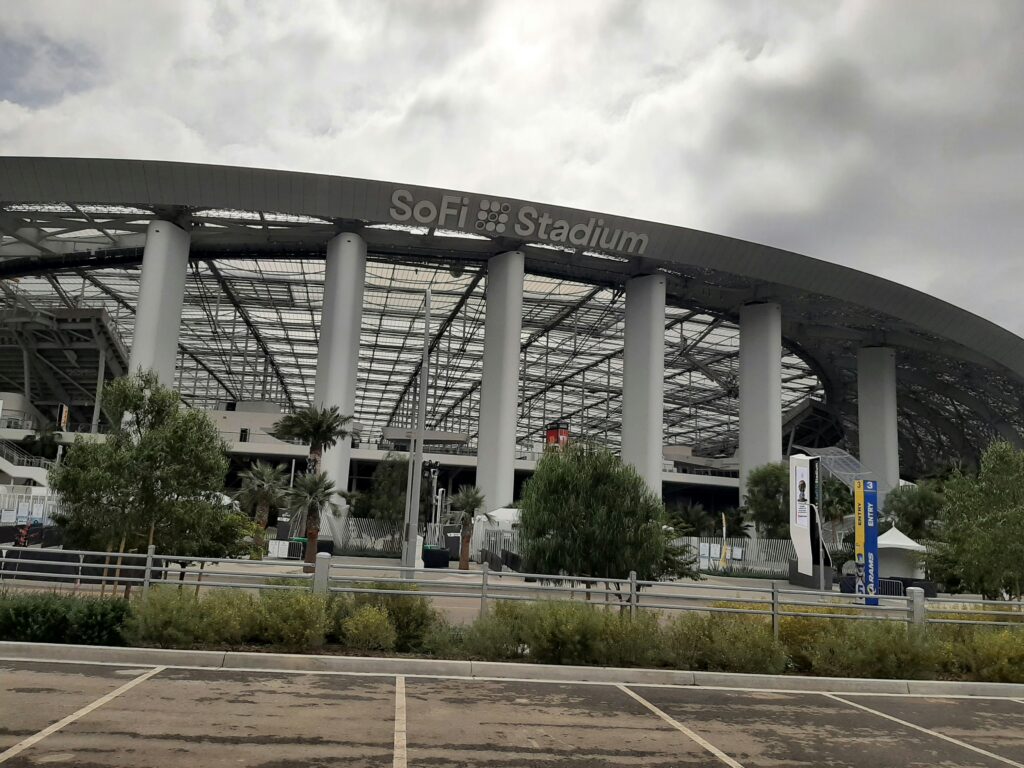
SoFi Stadium sits in Inglewood at 1001 Stadium Drive, officially called Los Angeles Stadium in all FIFA communications during the tournament. It’s 3 miles from LAX and about 25 minutes from downtown by car in normal traffic, considerably longer on match days.
The Metro K Line (Crenshaw Line) stops at Fairview Heights Station, a short walk from the stadium entrance. On match days, a free shuttle runs from Downtown Inglewood Station to the venue. Take it. Parking around SoFi on match days sells out and post-match traffic on the 405 and I-110 is genuinely bad. The K Line connects to the Metro E Line (Expo Line), which reaches downtown LA, Culver City and Santa Monica. Buy a TAP card at any Metro station or tap contactless at the turnstile; single rides cost $1.75.
The official FIFA Fan Festival is at Exposition Park and the LA Memorial Coliseum, the venue for the 1932 and 1984 Olympics, a short walk from the Metro E Line’s Expo Park/USC stop. Entry is free. Live match broadcasts, food vendors and cultural programming run throughout the tournament June 11 to July 19.
The Neighborhoods Worth Your Time
Koreatown
Koreatown is the most densely populated neighborhood in Los Angeles and one of the most food-concentrated in the country. Despite the name, it is majority Latino in population, which produces a culinary overlap that exists nowhere else: late-night Korean barbecue alongside Oaxacan tlayudas, Japanese ramen next to Salvadoran pupusas, all operating within a few blocks of each other.
The food is the reason to come. Park’s BBQ on South Vermont Avenue is the reference point for serious Korean barbecue in LA, the kind of place where the meat quality matters and the banchan keeps coming without being asked. Seobok on 6th Street handles galbi-jjim (braised short ribs) in a way that ends conversations. For Oaxacan food, Guelaguetza on Olympic Boulevard has been operating since 1994 and serves mole negro, tlayudas and mezcal at prices that have not caught up with the neighborhood’s rising profile.
Koreatown also runs some of the best karaoke in North America, in the norebang format where private rooms are rented by the hour rather than performed onstage. This is relevant at midnight between matches when everything else has closed.
East Los Angeles and Boyle Heights
East LA is the heart of Mexican-American Los Angeles and has been for over a century. The food along Cesar Chavez Avenue and Whittier Boulevard runs from breakfast tacos de canasta (basket tacos, steamed rather than grilled, sold from coolers at street corners) through carnitas, birria de res and late-night elotes. Mariscos Jalisco on Olympic Boulevard near the LA River has been serving fried shrimp tacos and aguachiles to a perpetual queue since 1994.
Mariachi Plaza at 1st Street and Boyle Avenue is where the city’s mariachi musicians gather in the mornings to wait for bookings, dressed in charro suits and playing informal sets while they wait. It is completely free and entirely genuine. There is no version of this anywhere else in the world outside of Guadalajara.
Silver Lake and Los Feliz
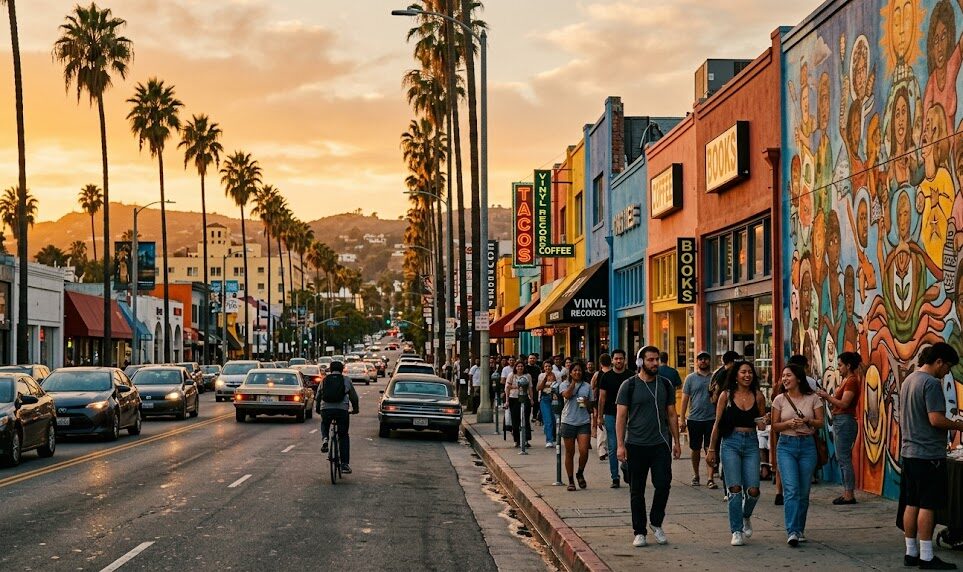
If Koreatown is the city at full volume, Silver Lake is the city at mid-register: independent coffee shops, vinyl record stores, bookshops, small restaurants with short menus and strong points of view. Sunset Junction, where Sunset Boulevard bends north, is the neighborhood’s natural center. Intelligentsia Coffee on Sunset Boulevard is where the city’s specialty coffee culture effectively started in Los Angeles. The surrounding blocks hold enough independent retail and restaurant variety for a full afternoon.
Los Feliz, immediately east, sits at the foot of Griffith Park and contains the Griffith Observatory, the most democratic viewpoint in the city: no admission required to reach the hilltop or use the outdoor terraces, which offer a view of the full LA basin from downtown to the ocean. Go at dusk. The Hollywood sign is visible from the east lawn. The view is better than anything you’d pay for.
Day Trip: Tijuana (Mexico), 2 Hours South
For fans with a full day free and a valid passport, Tijuana is the most underrated day trip from any World Cup host city in the tournament.
The drive from downtown LA to the San Ysidro border crossing takes 2 to 2.5 hours on the I-5 south. From the crossing, Tijuana’s Zona Centro is walkable or a short Uber ride. The Mercado Hidalgo sells cheese, chiles, seafood and mezcal to a crowd that is entirely local. Avenida Revolución, the tourist strip, is less interesting than the surrounding blocks. The food scene centered around the Mercado del Popo and the restaurants of Zona Río has become one of the most talked-about in Mexico in the last decade: Caesar salad was invented here, at Caesar’s Restaurant, which still operates on Revolución, and the current generation of chefs has built on that legacy with a coastal-influenced cooking that draws from both sides of the border.
Cross-border note: US and Canadian citizens cross back with a valid passport. Most other nationalities need to verify their re-entry documents to the US before crossing into Mexico; a valid US visa or ESTA is required for the return crossing. The San Ysidro pedestrian crossing is open 24 hours. Wait times returning to the US vary from 20 minutes to 2 hours depending on day and time; Sunday afternoons are the worst. The CBP One app shows live wait times at cbp.gov.
Day Trip: Joshua Tree, 2.5 Hours East
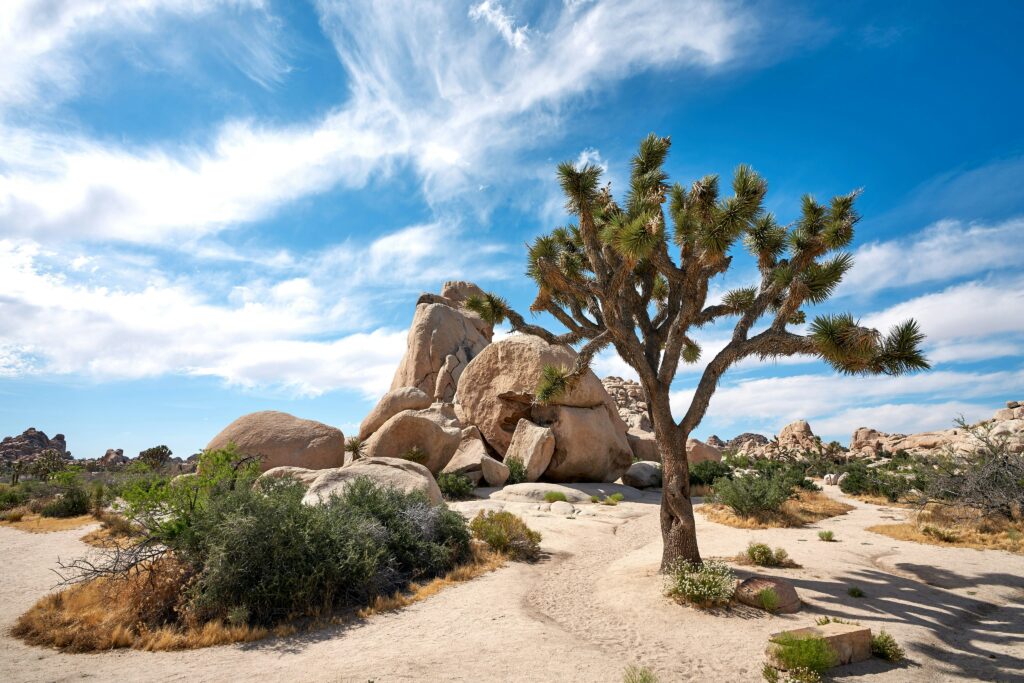
In the opposite direction from Tijuana, Joshua Tree National Park sits in the high desert 140 miles east of Los Angeles on the I-10. The park covers 790,000 acres of Mojave and Colorado desert terrain, split by the transition zone where the two ecosystems meet and where the Joshua trees, which are not trees but giant yuccas, grow most densely.
The drive from LA takes 2 to 2.5 hours depending on traffic leaving the city. Enter at the north entrance near the town of Joshua Tree, which has gas stations, cafés and the kind of gear shops that exist specifically because people arrive underprepared. Inside the park, the Skull Rock Nature Trail is a 1.7-mile loop suitable for most fitness levels. Hidden Valley Trail is slightly more demanding but passes through one of the park’s most characteristic boulder formations.
The park entrance fee is $35 per vehicle, valid for seven days. There is no public transport from LA to Joshua Tree; a rental car is required. Book through Rentalcars.com or Discover Cars several weeks in advance. Summer temperatures inside the park regularly exceed 38 degrees Celsius in July; start any hike before 8am, carry more water than you think you need, and be back at the car by noon.
Day Trip: Santa Barbara, 1.5 Hours North
Santa Barbara is what Los Angeles would look like if it had been planned by someone with a strong aesthetic preference and unlimited authority. White stucco buildings with red tile roofs, a working fishing harbor, a farmers market that runs every Saturday morning on State Street and attracts chefs from across the region, and a wine country starting 30 minutes inland in the Santa Ynez Valley.
The Pacific Surfliner train from LA Union Station to Santa Barbara takes approximately 2.5 hours and costs $25 to $40 each way depending on booking time. Book at amtrak.com. The Funk Zone, a former industrial area near the waterfront, holds the highest concentration of wine tasting rooms per block anywhere in California, most of them pouring Santa Barbara County wines that rarely make it to retail outside the region. Brander Vineyard and Margerum Wine Company both offer tastings without reservations on most days.
Practical Notes for World Cup Fans in LA
Getting around: Los Angeles without a car is possible but requires planning. The Metro network covers the main tourist corridors and all World Cup-related locations adequately. Uber and Lyft work reliably; surge pricing is severe near SoFi immediately after matches. For day trips to Tijuana, Joshua Tree and Santa Barbara, a rental car or train is required. Book cars through Rentalcars.com at least 4 to 6 weeks ahead; prices during the tournament window have surged.
Accommodation: LA hotel rates during the tournament run $250 to $350 per night for mid-range properties, lower than New York and Miami but still elevated above normal summer pricing. Inglewood and Culver City offer the closest proximity to SoFi at rates slightly below the Hollywood and Santa Monica corridors. Booking.com and Airbnb both have strong inventory; the city’s size means options exist across a wide price range.
Food costs: LA is one of the best cities in the world for eating well cheaply, as long as you leave the tourist zones. Street tacos run $1.50 to $3. A sit-down meal at a local non-tourist restaurant costs $12 to $20. A meal in Santa Monica or on the Sunset Strip costs three times more for comparable quality.
Weather: June and July in LA run warm and dry, typically 25 to 30 degrees on the coast and significantly hotter inland and in the desert. The coast stays cooler than the valleys; Santa Monica and Venice are noticeably more comfortable in July than Koreatown or East LA. Carry sunscreen. The sun is strong and the UV index is high even when it doesn’t feel hot.
Connectivity: Airalo for US eSIM before arrival. The Metro TAP card system accepts contactless payment at turnstiles. Download Google Maps offline for LA before leaving your accommodation; the city is large enough that offline maps matter when data coverage drops.
Plan Your LA Off-Days Around How You Travel
A budget traveler’s Los Angeles and a comfort seeker’s Los Angeles share the same highways and almost nothing else. The Traveneur Trip Planner builds a complete day-by-day LA itinerary calibrated to your travel style in about two minutes. Budget Backpacker, Independent Traveler, Comfort Seeker or Adventure Traveler: tell it how many days you have and it returns a real plan, not a highlights list.
The LA That Doesn’t Wait for You to Find It
Los Angeles is a city that has to be pursued. It does not arrange itself for the visitor the way that smaller, more walkable cities do. There is no center that contains the essential experience. The essential experience is distributed across 500 square miles of neighborhoods that each operate according to their own logic.
The fans who get it right are the ones who pick a corner of the city on a given day and go deep into it rather than skimming the surface of five. An afternoon in Koreatown ends differently than an afternoon in East LA, which ends differently than a morning in Silver Lake followed by a drive to Joshua Tree. All of them are Los Angeles. None of them are the postcard. That’s the point.
Official LA tourism information: discoverlosangeles.com. Metro transit planning: metro.net. Match schedule and tickets: fifa.com/worldcup.
Related Post: How to Travel Between World Cup 2026 Host Cities: Flights, Trains, Road Trips and the Routes Worth Taking