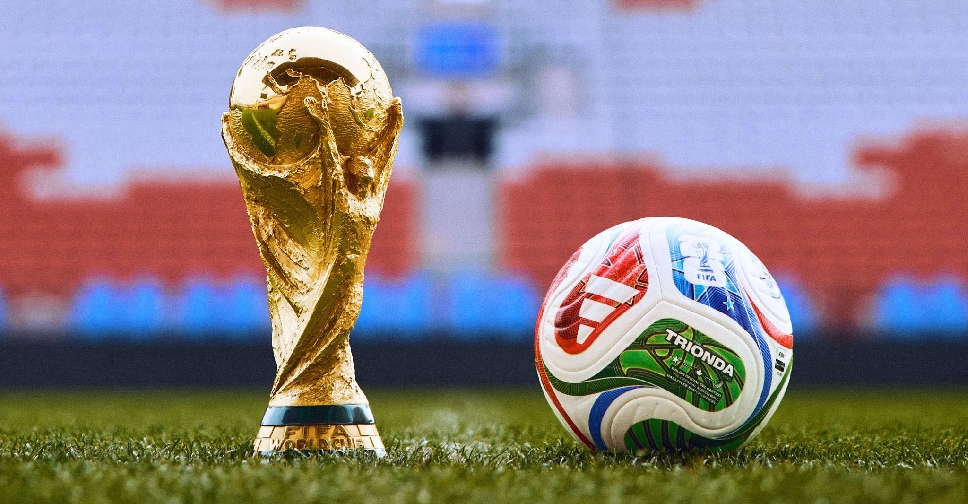
FIFA World Cup 2026 Travel Guide: Everything You Need to Know Before You Go
The FIFA World Cup 2026 travel guide you actually need is not the one that tells you which stadiums are biggest or which opening ceremony to watch. It’s the one that helps you arrive, move, sleep, eat and get to a match without spending your entire savings on a taxi from the wrong airport. This is that guide.
The 2026 tournament runs from June 11 to July 19 across 16 cities in three countries: the United States, Canada and Mexico. It’s the largest World Cup in history, with 48 teams, 104 matches and an estimated tens of millions of visitors moving through North America over six weeks. The logistics are, to put it plainly, complicated. Three countries means three separate visa regimes. Three currencies. Three distinct public transport systems. And a combined territory that spans roughly 3,000 miles from Vancouver to Mexico City. Getting this right before you arrive is not optional.
This guide covers everything: visas by country and nationality, how to move between host cities, where accommodation still exists and how much it costs, what apps you need, and the practical details that most World Cup travel coverage skips because they’re not glamorous. Read it before you book your second ticket.
The 16 Host Cities at a Glance
United States (11 cities)
Atlanta, Boston (Foxborough), Dallas (Arlington), Houston, Kansas City, Los Angeles (Inglewood), Miami, New York/New Jersey (East Rutherford), Philadelphia, San Francisco Bay Area (Santa Clara) and Seattle. The final takes place at MetLife Stadium in East Rutherford, New Jersey on July 19, 2026.
Mexico (3 cities)
Mexico City, Guadalajara and Monterrey. Mexico hosts the tournament’s opening matches.
Canada (2 cities)
Toronto and Vancouver. Canada hosts ten matches total.
World Cup 2026 Visa Requirements: What You Need for Each Country
This is the most important section of this guide. There is no single World Cup visa covering all three host nations. Each country has its own entry requirements, and a ticket to a match does not guarantee entry at any border.
United States
Option 1: ESTA (Visa Waiver Program) Citizens of 42 eligible countries, including most EU nations, the UK, Japan, South Korea, Australia and New Zealand, can apply for an ESTA online at esta.cbp.dhs.gov. Cost: $40.27. Valid for two years or until passport expiry. Processing usually takes minutes, sometimes hours. Apply at least 72 hours before travel.
Option 2: B-1/B-2 Tourist Visa All other nationalities must apply for a B-1/B-2 visitor visa at their nearest US embassy or consulate. Application fee: $185. Required documents include a completed DS-160 form, passport photo, fee receipt, proof of ties to your home country, bank statements, match tickets and hotel reservations. Processing times vary enormously by embassy: from one week to over six months. Some nationalities have reported wait times of 10 to 16 months at certain posts. Apply immediately if you have not done so already.
FIFA PASS The US State Department created a priority appointment scheduling system for fans who need a B-1/B-2 visa interview. To use it, you must have purchased tickets directly from FIFA and opted in during that process. FIFA PASS speeds up interview scheduling only; it does not change visa eligibility or guarantee approval. If you already hold a valid US visa or are traveling on ESTA, FIFA PASS does not apply to you.
Important note for 2026: US immigration enforcement has been heightened this year. Visa refusal rates have increased at some posts and border questioning has become more thorough. A well-prepared, honest application is still the standard path. Do not understate the purpose of your visit.
Canada
Canada does not have a special World Cup visa. You enter as a regular tourist. Requirements depend on your passport:
Visa-exempt countries: Apply for an eTA (Electronic Travel Authorization) online at canada.ca/eta. Cost: CAD $7. Processing usually takes minutes. Required even for transit through Canada by air. Note that you can mention “FIFA World Cup 2026” in the background questions section.
Visa-required countries: Apply for a Temporary Resident Visa (TRV) through the IRCC online portal at ircc.canada.ca. Cost: CAD $100. Processing times vary; apply several months in advance.
A match ticket does not guarantee entry. Canadian border officers make the final decision.
Mexico
Visa-exempt countries: Citizens of most Western European nations, the US, Canada, UK, Japan, South Korea and Australia can enter Mexico without a visa. On arrival, you complete an FMM (Forma Migratoria Múltiple) tourist card, which is now processed digitally at the border or airport. Stays of up to 180 days are permitted.
Visa-required countries: Apply at your nearest Mexican consulate before travel. Check current requirements at gob.mx.
If you plan to travel across all three countries, you need to satisfy the entry requirements of each independently. There is no shared arrangement.

How to Travel Between World Cup 2026 Host Cities
The Northeast Corridor: New York, Philadelphia and Boston
The most logical multi-city route in the tournament. New York to Philadelphia by Amtrak takes about 1 hour 15 minutes; Philadelphia to Boston takes around 5 hours or a 1-hour flight. All three cities are walkable from major train stations. Book Amtrak tickets at amtrak.com well in advance; Amtrak is expecting record demand and routes on this corridor will fill quickly.
Texas: Dallas and Houston
A natural road trip pairing. Dallas to Houston is 240 miles on I-45, approximately 3.5 to 4 hours by car. Flying takes about 1 hour but factoring in airport time makes driving competitive. Rental cars are widely available; book through Rentalcars.com or Discover Cars and reserve early.
The West Coast: San Francisco Bay Area, Los Angeles and Seattle
San Francisco to Los Angeles by car takes 5 to 6 hours on the Pacific Coast Highway or inland via I-5. Flights take about 1 hour 20 minutes. Los Angeles to Seattle is a 20-hour drive or a 2.5-hour flight; fly between these two. The Amtrak Coast Starlight connects Los Angeles to the Bay Area but runs once daily and is frequently delayed; not recommended for time-sensitive travel.
Seattle to Vancouver (Canada) by Amtrak Cascades takes approximately 4 hours and is one of the most scenic and stress-free cross-border routes in the tournament. Book at amtrak.com. Driving the border during a major international event can mean significantly longer wait times.
Cross-Border: US and Mexico
For US cities to Mexico City, Guadalajara or Monterrey, flying is the most reliable option. Driving across the US-Mexico border during the World Cup period means elevated traffic and unpredictable wait times. If you do drive into Mexico, US and Canadian auto insurance policies do not cover you. Purchase Mexican auto insurance separately before crossing; it’s available online and at border crossings.
Cities Where Flying Is the Only Practical Option
Houston to Seattle, Miami to Dallas, Kansas City to Boston: for these and other long-haul combinations, flying is your only realistic option. Use Google Flights multi-city search to compare open-jaw routes (fly into one city, out of another) and Rome2rio to see all transport options between any two cities at once.
Book domestic US flights 6 to 8 weeks ahead; cross-border flights 8 to 12 weeks ahead. Prices on match-adjacent dates will be significantly higher than surrounding days.
World Cup 2026 Accommodation: What It Costs and How to Find It
Hotel prices across all 16 host cities have surged well above normal summer rates. The degree varies significantly by city.
Cheapest host cities (average nightly rate during the tournament window): Houston leads at around $205 per night with the lowest match-day premium of any US city (around 8%). Atlanta and Kansas City follow at roughly $220 per night. Mexico’s three host cities are the most affordable in the entire tournament. Monterrey averages around $207 per night. Guadalajara runs slightly lower. Mexico City sits at around $267. Local transport in Mexican cities is also a fraction of US costs.
Most expensive host cities: Vancouver faces the most severe shortage, with a projected shortfall of 70,000 accommodation nights during the tournament. Hotel rates reached $330 per night in July 2025 and have risen further since. New York, Miami and Boston are all in the $400 to $600 range for mid-range properties on match nights. Los Angeles, despite being a large city, has held more stable at around $250 to $350 due to its high overall room count.
How to reduce accommodation costs:
Book your full trip duration rather than only match nights. Hotels price by demand; a five-night booking that includes two match nights will average out significantly lower than two separate one-night match bookings.
Consider staying outside the host city and commuting in. Providence, Rhode Island offers rates of $150 to $300 per night with direct access to Boston’s Gillette Stadium. San Jose covers Levi’s Stadium at meaningfully lower rates than San Francisco proper. For New York matches, Newark and Jersey City in New Jersey run 30 to 40 percent cheaper than Manhattan.
Use Booking.com and Airbnb simultaneously; inventory between platforms varies by city. Book a free-cancellation rate immediately even if your plans aren’t finalized; you can cancel and rebook if better options emerge.
Hostels are available in every host city and represent the most affordable option for solo travelers. In Mexico, dorm beds start around $15 to $30 per night. In US cities, expect $50 to $100 per night for a bed in a well-located hostel. Hostelworld has the most complete inventory.
Getting Around Host Cities on Match Days
Every host city has a transit system. Every transit system will be under enormous pressure on match days. The consistent advice from local organizers across all 16 cities: take public transport to the stadium, not a car or rideshare.
Post-match rideshare wait times and surge pricing are a genuine problem when 60,000 to 90,000 fans leave a venue at the same moment. Walking 15 to 20 minutes away from the stadium exit before requesting a Grab or Uber dramatically reduces both the wait and the price. In cities where transit runs close to the stadium (Atlanta’s MARTA, Seattle’s Link Light Rail, Philadelphia’s SEPTA), use transit for the return journey as well.
Download transit apps for each city before you arrive. Google Maps handles transit directions reliably across all 16 cities. Citymapper is better for real-time disruption alerts in New York, Boston and Toronto.
Apps and Tools Worth Installing Before You Arrive
Connectivity: Airalo for eSIM cards covering the US, Canada and Mexico. Buy before you land; having data the moment you step off the plane matters more than you think when you’re navigating an unfamiliar city with a packed schedule.
Transport: Rome2rio for any city-to-city route comparison. Amtrak app for rail bookings. Uber or Lyft for US rideshare; InDrive for Mexico.
Accommodation: Booking.com, Airbnb and Hostelworld.
Currency: XE Currency for live exchange rates across USD, CAD and MXN in one place.
Navigation: Google Maps with offline maps downloaded for every city on your itinerary. Download before leaving your hotel each morning; mobile data is not always reliable near large stadiums.
Translation: Google Translate with Spanish downloaded offline. Useful in Mexico and in heavily Spanish-speaking neighborhoods across US host cities.
Travel insurance: World Nomads or SafetyWing. A six-week trip across three countries with flights, matches and constant movement is exactly the scenario travel insurance exists for.
World Cup 2026 Budget Guide: What to Expect
Total trip costs vary enormously depending on which cities you visit, how many matches you attend, and how you travel. Based on data from multiple sources, international fans are spending an average of over $5,000 per person on a World Cup trip. That figure covers flights, accommodation, tickets and daily expenses; it does not mean you can’t do it for significantly less.
Match tickets: Group stage tickets were priced from $80 to $520 depending on category and match. Knockout round tickets are considerably higher. Secondary market prices for high-demand fixtures (semifinals, final) have exceeded $1,500 per seat.
Daily expenses in US cities: Food ranges from $10 to $15 for a budget meal at a local spot to $40 to $60 for a mid-range restaurant. Local transport with a day pass runs $7 to $10 in most cities. A cone of fries or a street taco costs $3 to $7. Beer at a stadium runs $15 to $20 for 16oz.
Daily expenses in Mexico: Noticeably lower across the board. Street food in Mexico City costs $2 to $5. Local transport on the metro is under $0.50 per ride. A proper sit-down meal in a non-tourist restaurant runs $8 to $15.
The single most effective budget strategy: pick fewer cities and spend more time in each. A multi-city trip that covers five US cities in five days costs significantly more in flights, hotels and logistics than spending five days in one city and exploring properly. The tournament is six weeks long. You do not need to chase it across the continent.
Plan Your World Cup Trip Around How You Travel
A budget backpacker’s World Cup and a comfort seeker’s World Cup use the same stadiums and produce entirely different trips. The Traveneur Trip Planner builds a complete day-by-day itinerary for any of the 16 host cities around your travel style: Budget Backpacker, Independent Traveler, Comfort Seeker or Adventure Traveler. Tell it which city, how many days, and how you like to move. It returns a real plan in about two minutes, including what to do on days when there’s no match.
Before You Leave Home: The Checklist That Actually Matters
At least 3 months before departure: Apply for all necessary visas. Check passport validity (minimum six months beyond your return date for US entry; some countries require more). Book international flights. Start searching for accommodation even if not booking yet.
6 to 8 weeks before departure: Book domestic flights between US host cities. Reserve accommodation with free cancellation if not already done. Purchase travel insurance. Apply for ESTA or eTA if applicable.
2 weeks before departure: Download offline maps for every city. Buy eSIM card. Confirm all bookings. Check match-day transport routes for each stadium. Check visa requirements one final time for any recent changes.
Day of arrival: Set automatic exchange-rate alerts on XE. Screenshot your accommodation addresses. Download your match tickets to the FIFA app offline. Identify the nearest transit stop to your hotel.
The 2026 World Cup is the largest sporting event ever held on North American soil. The planning it requires reflects that scale. Do it early, do it carefully, and then stop worrying about logistics and focus on the football.
Official FIFA tournament information: fifa.com/worldcup. US visa information: travel.state.gov. Canada entry requirements: canada.ca. Mexico entry requirements: gob.mx/sre.
Read More: World Cup 2026 Survival Guide: Visas, Costs, Apps and What No One Tells You Before the Tournament