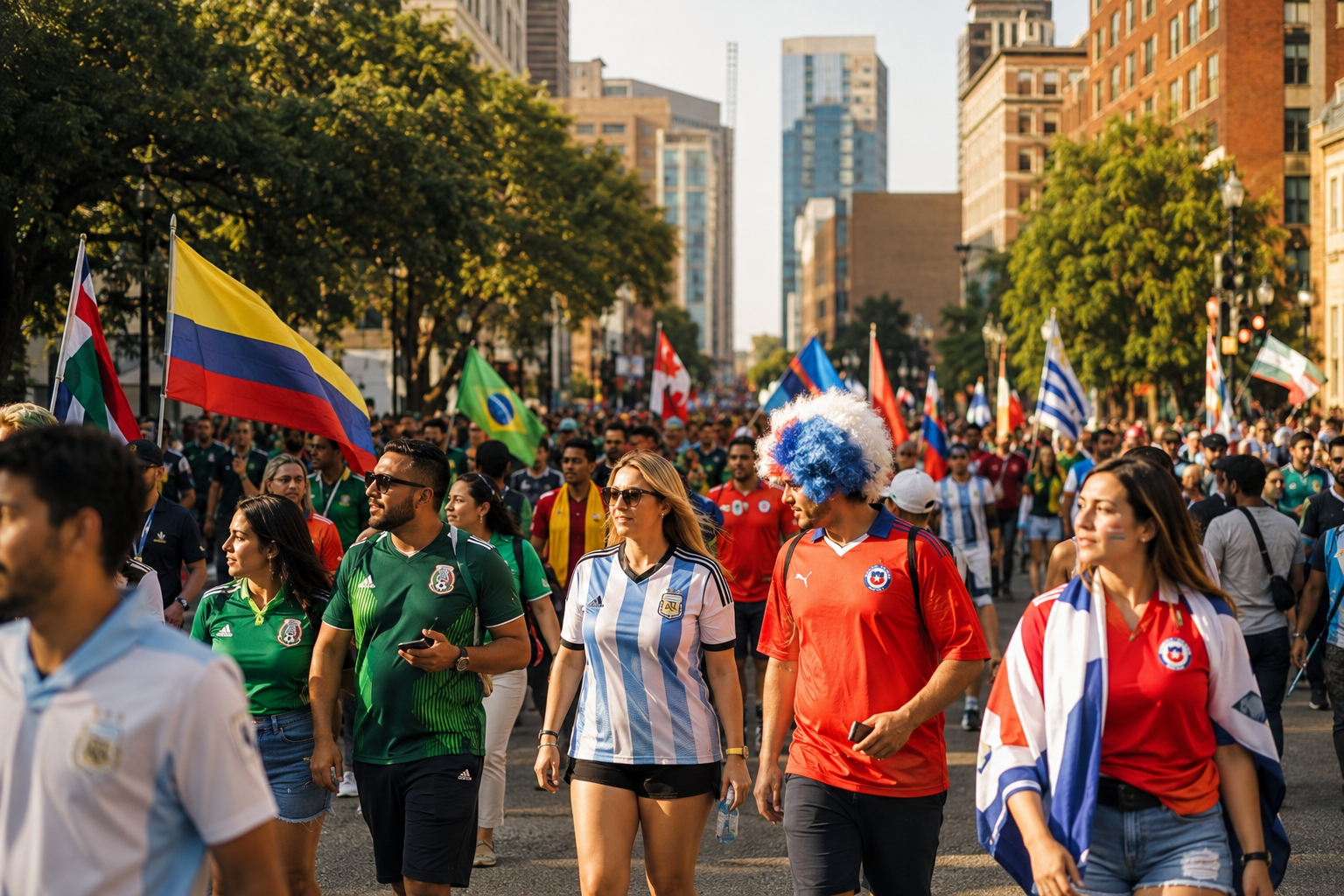
World Cup 2026 Survival Guide: Visas, Costs, Apps and What No One Tells You Before the Tournament
The World Cup 2026 survival guide that fans actually need is not the one with stadium seat maps and souvenir recommendations. It’s the one that covers what happens when your ESTA gets flagged, why your hotel confirmation number doesn’t match what’s on the booking app, how much cash you should actually carry in Mexico City versus Kansas City, and which app you should have downloaded before you realized you needed it. This is that guide.
The 2026 tournament is the largest and most logistically complex World Cup ever staged. Forty-eight teams, 104 matches, 16 cities, three countries, six weeks. The fans who enjoy it most will be the ones who sorted out the practical details before they boarded their first flight. The ones who don’t will spend match days solving problems that should have been handled at home.
What follows is the practical intelligence that most World Cup coverage doesn’t include because it’s not as exciting as stadium renderings: entry requirements, real costs, money management, safety, connectivity and the specific apps that matter in each country.
Visas: The Part You Cannot Leave Until the Last Minute
This deserves to come first because it’s the piece with the longest lead time and the highest stakes if you get it wrong.
United States Entry
ESTA (Visa Waiver Program countries): Citizens of 42 eligible countries, including most EU nations, the UK, Australia, Japan and South Korea, apply at esta.cbp.dhs.gov. The fee is $40.27. Processing is usually immediate but can take up to 72 hours. An ESTA is valid for two years and multiple trips. Apply at least a week before travel to avoid last-minute stress. Check your eligibility before assuming you qualify; recent travel to certain countries (Iran, Iraq, Syria, Cuba, North Korea) may disqualify you from ESTA and require a full visa instead.
B-1/B-2 Tourist Visa (all other nationalities): Application fee is $185 at ceac.state.gov. You’ll complete a DS-160 form online, pay the fee, and attend an in-person interview at your nearest US embassy or consulate. Documents required: passport, photograph, DS-160 confirmation, fee receipt, bank statements, match tickets and hotel bookings, proof of return travel. Processing times vary from one week to over six months depending on your embassy. Some posts in South America, South Asia and Africa currently have wait times exceeding 10 months. If you haven’t applied yet and your passport is from one of these regions, start today.
FIFA PASS: A priority appointment scheduling system for B-1/B-2 applicants who purchased tickets directly from FIFA. It speeds up the interview queue only. It does not guarantee a visa or change eligibility requirements. If you hold a valid US visa already or are traveling on ESTA, FIFA PASS does not apply to you.
What border officers actually check: Be honest about your purpose of travel. Saying you’re visiting “for tourism” when you have a folder of match tickets is not a problem; say you’re attending the World Cup. Border officers are not looking to refuse fans with legitimate documentation. They are looking for inconsistencies. A well-organized, honest entry process is almost always straightforward.
Canada Entry
No special World Cup visa exists. Enter as a regular tourist.
Visa-exempt nationals: Apply for an eTA at canada.ca/eta. Cost: CAD $7. Processing is usually minutes; occasionally a few days. Required even for air transit. When completing the application, note your World Cup travel in the background questions section.
Visa-required nationals: Apply for a Temporary Resident Visa (TRV) through ircc.canada.ca. Cost: CAD $100. Apply several months in advance.
One important point: a match ticket does not guarantee entry into Canada. The border officer makes the final decision based on your full documentation. Have accommodation bookings, a return ticket and proof of sufficient funds available if asked.
Mexico Entry
Citizens of most Western nations, including the US, EU countries, UK, Canada, Australia and Japan, enter Mexico without a visa. An FMM tourist card is processed digitally at the airport or land border on arrival. Stay permitted: up to 180 days.
For visa-required nationals, apply at your nearest Mexican consulate. Current requirements are listed at gob.mx/sre.
If you’re crossing a land border into Mexico: Your US or Canadian auto insurance does not cover you in Mexico. Buy Mexican auto insurance separately before crossing; it’s available online at mexicaninsurance.com or at border crossings.
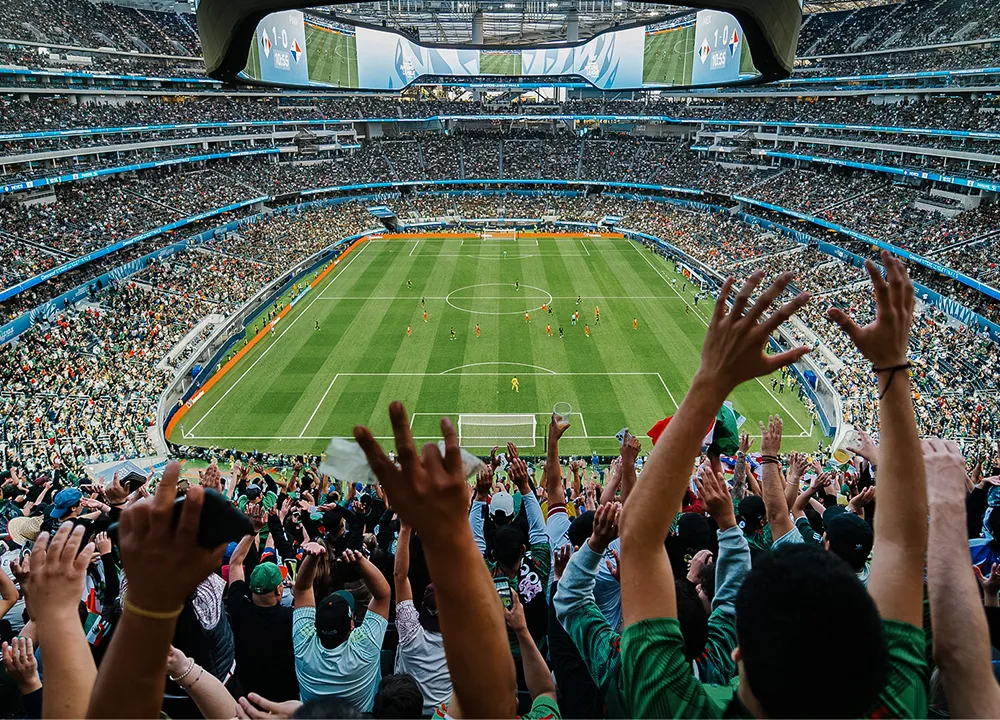
What Everything Actually Costs: A City-by-City Reality Check
The average international fan is spending over $5,000 per person on a World Cup 2026 trip. That number includes flights, accommodation, tickets and daily expenses. It does not mean yours needs to. Here is what to realistically expect by location.
US Host Cities
Accommodation: Hotel prices have surged 70 to 300 percent above normal summer rates across most US host cities. The cheapest US options are Houston (around $205 per night average during the tournament), Kansas City and Atlanta (both around $220). New York, Miami and Boston run $400 to $600 per night for mid-range properties on match nights. Los Angeles and San Francisco hold steadier at $250 to $350 due to high overall room counts.
Food and drink: A street food meal or a food truck runs $10 to $15. A sit-down lunch at a local non-tourist restaurant costs $15 to $25 per person. A stadium beer is $15 to $20 for 16oz. A coffee in most US cities costs $5 to $7. In Mexico the same coffee costs $2. Budget travelers who eat outside tourist zones and use supermarkets for breakfast and lunch can manage food costs at $30 to $40 per day in US cities.
Local transport: Public transit day passes run $7 to $10 in most US host cities. Uber and Lyft cost $15 to $40 for most in-city trips depending on distance and time of day; surge pricing near stadiums immediately after matches can push single rides to $80 or more. Walking away from the venue before requesting a pickup cuts this substantially.
Tipping in the US: Expected everywhere. Restaurant service: 18 to 22 percent. Bars: $1 to $2 per drink. Taxi and rideshare: 15 to 20 percent. Housekeeping: $3 to $5 per night. Not tipping at a restaurant is noticed and remembered; it is not a cultural grey area in the US.
Mexico Host Cities
Accommodation: The three Mexican host cities are the most affordable in the tournament. Mexico City averages around $267 per night during the tournament window, Monterrey around $207 and Guadalajara slightly lower. Hostels in Mexico City start around $15 to $30 per night.
Food: Mexican host cities are a genuine pleasure for food costs. A street taco costs $0.50 to $1.50. A proper sit-down meal at a local restaurant runs $8 to $15 per person. A beer at a bar costs $2 to $4. An Uber across Mexico City typically costs $3 to $8.
Local transport in Mexico City: The Metro is one of the best-value transit systems in the world at under $0.50 per ride. Clean, extensive and air-conditioned. For trips not well covered by Metro, Uber operates reliably and cheaply. InDrive (available in all three Mexican cities) often undercuts Uber on price for longer routes.
Tipping in Mexico: Expected at restaurants (10 to 15 percent), not expected for street food vendors.
Canada Host Cities
Accommodation: Toronto and Vancouver are expensive. Vancouver has a projected shortfall of 70,000 accommodation nights during the tournament; rates have pushed above $330 per night on average, up nearly 190 percent in five years. Toronto is more manageable in comparison but still runs $250 to $400 for decent mid-range properties.
Food: Canada runs close to US pricing for restaurants. Expect $15 to $25 for a restaurant main, $3 to $4 for a coffee. Poutine is genuinely good in both cities and costs $10 to $15 at a proper spot.
Local transport: Both cities have solid transit systems. Toronto’s TTC runs a day pass for around CAD $14. Vancouver’s TransLink offers a day pass around CAD $12.
Money: Cards, Cash and the Practical Details
Cards work almost everywhere in the US and Canada. Contactless payment is standard; you will rarely need cash in urban US environments. The exception is small vendors, street food and tipping at bars, where small bills are practical. Carry $40 to $60 in US dollars for US cities.
Cash matters more in Mexico. Many local restaurants, street markets and smaller vendors operate cash-only or prefer it. Carry Mexican pesos from an ATM after arriving (airport ATMs are fine; use bank ATMs over standalone machines to avoid high fees). Exchange rate: approximately 17 to 18 MXN to $1 USD as of mid-2026.
Avoid airport currency exchange desks. The rates are consistently poor. Use your bank card at ATMs or a service like Wise for card-based currency conversion at near mid-market rates. Wise works as a debit card in all three countries.
Notify your bank before you travel. Cards get blocked for unusual international activity. A five-minute call or app notification before your first match prevents a significant inconvenience later.

Connectivity: Staying Online Across Three Countries
Your home SIM card will not cover all three countries, and roaming charges on a six-week trip can be severe.
The practical solution for most international travelers is a multi-country eSIM. Airalo offers eSIM plans covering the US, Canada and Mexico, purchasable before you leave home and activated remotely. A 30-day plan covering all three countries costs approximately $25 to $45 depending on data allowance. Install it before your departure flight so you have data the moment you land.
If your phone doesn’t support eSIM, physical SIM cards from T-Mobile, AT&T or Telcel (Mexico) cover most of the tournament territory. T-Mobile’s tourist SIM plans include Mexico and Canada coverage.
Download offline maps for every city on your itinerary before you rely on mobile data. Stadium zones, post-match streets and transit hubs often have saturated networks; offline maps continue working when cellular data can’t keep up.
Safety: The Practical Breakdown
United States: Generally safe for tourists across all 11 host cities. Standard urban precautions apply: keep valuables not visible in public, be aware in crowded areas (pickpocketing occurs near major transit hubs and tourist zones), and use legitimate rideshare apps rather than unofficial taxis. Emergency number: 911.
Canada: Among the safest countries for tourists. Vancouver and Toronto present no unusual risks for visitors. Standard city awareness applies. Emergency number: 911.
Mexico: The three host cities, Mexico City, Guadalajara and Monterrey, all receive millions of tourists annually and are well-prepared for the World Cup. Stay in central, well-lit neighborhoods. Use Uber or InDrive over street taxis, which don’t use meters and can overcharge. Avoid displaying expensive equipment publicly. The areas around stadiums and central tourist zones are well-policed during major events. Mexico City’s central neighborhoods (Roma, Condesa, Centro Histórico, Polanco) are straightforward for visitors. Emergency number in Mexico: 911 (works the same as the US).
Health and Insurance
Travel insurance is not optional for a six-week, three-country trip. Medical care in the US is expensive. A single emergency room visit without insurance can cost $3,000 to $10,000. Both World Nomads and SafetyWing offer policies suited to tournament travel; World Nomads covers adventure activities if your off-day itinerary includes hiking or physical activities. SafetyWing’s Nomad Insurance covers short-term trips at lower premiums.
Vaccinations: No vaccinations are specifically required for entry into the US, Canada or Mexico. Standard travel health precautions apply for Mexico: drink bottled or filtered water, be cautious with raw vegetables and ice in non-tourist restaurants.
Heat: Several World Cup matches will be played in June and July in Houston, Miami, Dallas and Mexico City in temperatures exceeding 35 degrees Celsius. Hydrate seriously on match days. Stadium concessions run out of water; carry your own bottle if permitted by venue rules.
The Apps That Actually Matter
Install these before you leave home:
Entry and documents: ESTA application (US) and Canada eTA (Canada). Complete these at home on reliable internet, not in an airport.
Connectivity: Airalo for multi-country eSIM.
Transport: Uber and Lyft for the US. InDrive for Mexico (often cheaper than Uber for longer distances). Amtrak for Northeast Corridor rail. Google Maps and Citymapper for transit in major cities.
Money: Wise for multi-currency card with mid-market exchange rates. XE Currency for live exchange rates across USD, CAD and MXN.
Accommodation: Booking.com, Airbnb, Hostelworld.
Language: Google Translate with Spanish downloaded offline. Useful throughout Mexico and in Spanish-speaking US neighborhoods.
Navigation offline: Maps.me or Google Maps offline download. Download city maps before you leave your hotel each morning.
Tournament: The official FIFA app for schedules, tickets and match information. Download your tickets to the app offline before entering stadium zones where network coverage saturates.
The Things No One Tells You
Surge pricing after matches is real and severe. Thousands of fans requesting rides at the same moment from the same location pushes Uber and Lyft fares to two to five times normal rates. Walk away from the stadium exit before opening the app. Even five minutes of walking changes the price dramatically.
Your hotel’s check-in might be in a different location from the address on Booking.com. This happens more with Airbnb and boutique properties. Confirm the exact entrance address and check-in process before you arrive, not after you’re standing on a street corner at 11pm with luggage.
Stadium food queues on match days are long. If a match starts at 6pm, the food lines from 5pm to 6pm are brutal. Eat before you go in or arrive early enough to eat at 4:30pm. The alternative is a $20 hot dog eaten while the starting whistle blows.
Match ticket scams exist. Only buy from official sources: FIFA’s official platform, authorized resellers listed on fifa.com, and licensed secondary platforms. QR code duplication scams targeting fans at venues are a documented problem at major tournaments. Verify your ticket through the official FIFA app before accepting any transfer.
Your phone dies faster when you’re constantly using maps, translation and photos. Carry a portable power bank. A 20,000mAh bank covers two full days of heavy smartphone use. This is not glamorous advice. It matters.
The Last Thing to Say Before You Go
The World Cup 2026 is a genuinely extraordinary event. 48 national teams, 104 matches across three countries, a final at MetLife Stadium on July 19 with a half-time show that FIFA has described as bigger than the Super Bowl. The fans who are present for it will have stories worth keeping.
The preparation above takes a few hours. What it prevents takes considerably longer to fix on the ground. Do the boring work early so that the six weeks in North America can be entirely about the football.
Official World Cup fan information: fifa.com/worldcup. US entry: travel.state.gov. Canada entry: canada.ca. Mexico entry: gob.mx/sre.
Related Post: FIFA World Cup 2026 Travel Guide: Everything You Need to Know Before You Go